

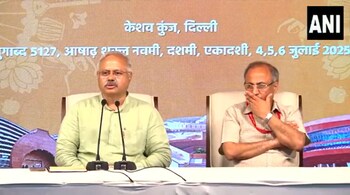
Rashtriya Swayamsevak Sangh (RSS) leader Sunil Ambekar in a press conference on Monday said that while the situation in conflict-hit Manipur remains sensitive, signs of peace are beginning to emerge.
“When the situation deteriorates somewhere, it doesn't improve within a day. But if we compare it to last year, normalcy has started setting in. It is the beginning of peace,” Ambekar said at a press conference.
Senior Rashtriya Swayamsevak Sangh (RSS) leaders Sunil Ambekar and Anil Agarwal asserted that with their workers on ground in Manipur, positive developments were taking place in the state.
Ambekar said, “RSS volunteers are actively working to restore peace and foster dialogue among the Meitei and other communities affected by the conflict." While he acknowledged the positive developments, Ambekar noted that complete normalcy will take more time.
Ambekar added that dialogues between communities are underway and expressed hope that these conversations would help pave the way for lasting resolution.
The RSS leadership also emphasized that they are implementing inclusive outreach in the region aimed at engaging diverse sections of society, claiming strong participation from border communities reflecting growing public trust and a widening social connection.
Touching upon the debate over the words socialist and secular in the Constitution, Ambekar recalled the Emergency period as a time of severe political repression and constitutional violations where "democratic values were suspended, and amendments were made without a genuine public mandate.” He urged future leaders to study this period to understand the dangers of unchecked power.
They also discussed the ongoing language row, reiterating the RSS’s stance that all Indian languages are national languages. Ambekar said that people should speak in the language of their region and that primary education should be delivered in the mother tongue.
During the press conference, the RSS also responded to past attempts by Congress to impose bans on the organisation, claiming such efforts failed due to public outrage and legal scrutiny, as the ban lacked legitimacy from the outset
The Sangh laid out its roadmap for large-scale engagement under the Panch Parivartan framework, focusing on five areas: economic self-reliance, individual well-being, values-based living, social welfare, and inclusive growth.
The RSS has identified mass outreach as the core focus of its centenary, aiming to connect with every section of society to promote inclusivity and strengthen national integration.
The RSS plans to:
--Host intellectual dialogues in all 924 Sangh-organised districts.
--Conduct over 1 lakh Hindu Sammelans across 58,000 mandals and 44,000 bastis.
--Organise Sangh training camps (Prashikshan Vargs), which last year saw over 17,600 volunteers—including 8,813 students—take part, with a notable focus on youth and inter-generational participation.
Discover the latest Business News, Sensex, and Nifty updates. Obtain Personal Finance insights, tax queries, and expert opinions on Moneycontrol or download the Moneycontrol App to stay updated!





