

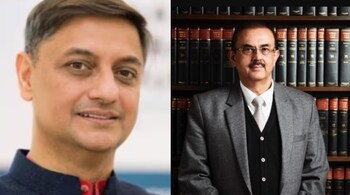
Supreme Court Bar Association (SCBA) President and Senior Advocate Vikas Singh came down heavily on economist and Prime Minister’s Economic Advisory Council member Sanjeev Sanyal for calling the judiciary the “biggest hurdle” in India’s journey towards Viksit Bharat. He described the remark as “irresponsible” and “made in bad taste,” insisting that it reflected “a lack of understanding of how the courts function.”
“To say that judiciary is responsible for India's developmental hurdles is very immature,” Singh asserted, rejecting Sanyal’s claim. “The greater part of the ills in the system are actually because of the government.” He pointed to insufficient infrastructure, low judicial pay, and flawed appointments as the real reasons behind delays in justice delivery.
On judicial vacations, Singh defended the practice, clarifying that the breaks were not indulgent. “Judges spend weekends reading case files and writing judgments, and without periodic breaks, there would be a classic case of burnout,” he explained. He further said bureaucrats who question these breaks often realise the intensity of judicial work only when they themselves serve on tribunals.
Turning to reforms, Singh argued that the government could easily create a transparent system for judicial appointments without undermining judicial independence. “The NJAC was struck down only on the ground that the executive had the upper hand in deciding the appointments. Why cannot the Government bring a law which will ensure a transparent method of appointments without compromising the judiciary's primacy?” he asked.
The SCBA President criticised the government for withholding or selectively clearing collegium recommendations, which, he said, led to “poor appointments” in the higher judiciary. “If the government really wants to strengthen the judiciary, it must provide adequate infrastructure, better pay for judges, and a credible appointment process. Otherwise, blaming the judiciary alone is neither fair nor responsible,” Singh emphasised.
On the issue of colonial-era honorifics, Singh dismissed Sanjeev Sanyal’s criticism of addressing judges as “My Lords” or “Your Lordships.” He said the practice was nothing more than habit. “It does not mean much. Lawyers have used it for years, but it can be done away with,” he remarked.
Singh did not deny that the judiciary itself needs reform. He acknowledged that faster dispute resolution would help improve investor confidence, but he maintained that blaming courts as the biggest obstacle to development was misleading. “Reducing complex structural issues to simplistic blame on the judiciary is misleading,” he said.
Discover the latest Business News, Sensex, and Nifty updates. Obtain Personal Finance insights, tax queries, and expert opinions on Moneycontrol or download the Moneycontrol App to stay updated!





