

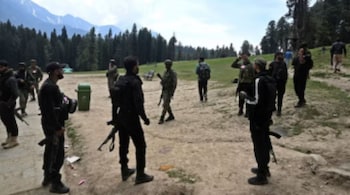
Days before the devastating terror attack in Pahalgam that left 26 dead, intelligence agencies had warned of a potential strike targeting tourists—particularly those lodged in hotels on the outskirts of Srinagar, near the foothills of the Zabarwan range, news agency PTI reported on Saturday citing officials.
In response to the alert, security was ramped up in areas such as Dachigam, Nishat, and surrounding zones. Top police officials were stationed in Srinagar to supervise intensified combing operations. These areas had already drawn attention after a deadly attack on a construction site in Gangangir, Sonamarg in October last year, where seven people, including a doctor, were killed.
Despite a two-week-long security operation based on these warnings, no significant leads were found. The operation concluded on April 22—the same day terrorists struck in Pahalgam.
Sources said there were credible inputs suggesting terrorists intended to stage attacks during Prime Minister Narendra Modi’s planned visit to flag off the inaugural train from Katra to Srinagar. Officials suspect Pakistan's displeasure with this landmark railway project, which will integrate the Kashmir Valley with the national rail network, could be a motivating factor.
Although the Prime Minister’s visit—originally scheduled for April 19—was postponed due to weather conditions, officials believe the attackers aimed to overshadow the event with violence. They noted that elements across the border, both state and non-state, oppose powerful symbolic events like the train launch gaining international attention.
According to officials, the Pahalgam attack appears to have been executed by a four-member group. Two local terrorists reportedly mingled with tourists and, once gunfire began, herded the victims into a food court where two Pakistani militants opened fire, killing 26 people. The intention, sources say, was to instill fear and provoke retaliatory violence against Kashmiris in other parts of India.
Quick intervention by Chief Minister Omar Abdullah, in coordination with New Delhi, ensured that states were directed to safeguard Kashmiri residents in their jurisdictions.
Officials also expressed concern about a shift in the nature of terrorism in Jammu and Kashmir. Encounters have increasingly led to the recovery of advanced weaponry, including M-series rifles, sniper weapons, and armor-piercing bullets—believed to be leftover NATO arms from Afghanistan.
Authorities cautioned against interpreting rising tourist numbers as a sign of normalcy in the region. Citing an example from May 2006—when four tourists were killed and six injured in Srinagar shortly after a former chief minister highlighted tourism as a marker of peace—officials emphasized that tourism should be viewed primarily as an economic indicator, not a barometer of stability.
Clarifying reports regarding Baisaran not being open to tourists, officials confirmed the area is accessible year-round, except during the Amarnath Yatra or heavy snowfall. The government had awarded a three-year contract for the site last August to a bidder from South Kashmir for ₹3 crore. The meadow has since been fenced, and a zipline facility established.
On recent counter-terror operations involving the demolition of houses, officials said the practice had been discontinued following a request from the elected J&K government.
Finally, they urged New Delhi to take serious note of the widespread protests across the Kashmir Valley following the April 22 attack—protests that, they said, bore a resemblance to the public outcry witnessed during the Nirbhaya case in the capital.
Discover the latest Business News, Sensex, and Nifty updates. Obtain Personal Finance insights, tax queries, and expert opinions on Moneycontrol or download the Moneycontrol App to stay updated!





