

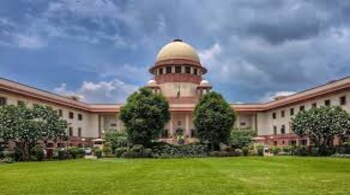
In a significant judgement on Thursday, the Supreme Court ruled that states are empowered to make sub-classifications of Scheduled Castes and Scheduled Tribes for granting quotas within the reserved categories to uplift the more underprivileged castes.
The landmark ruling by SC, which overturned its own 2004 judgment, upheld the core elements of social justice envisioned by the makers of Indian Constitution.
The SC was hearing references to revisit a five-judge constitution bench judgement of 2004 in the case of 'EV Chinnaiah vs State of Andhra Pradesh' in which it was held that SCs and STs are homogenous groups and hence, states cannot further sub-classify inside SCs and STs to grant quota inside quota for more deprived and weaker castes in these groups.
With both the SC and ST Commissions being consistent in its noting that allotting separate reservations within the categories would not really address the root cause of the problem of 'graded inequalities', here's an attempt by scholars, dalit activists and legal luminaries to breakdown the operative parts of today’s order.
Understanding the operative elements
The top court said sub-classification of castes among SCs must be based on degrees of their discrimination and can be done by states through collection of empirical data on their representation in government jobs and admissions to educational institutions.
However, the top court clarified that none of the castes categorised as scheduled caste could be completely deprived of quota benefit by a state in the guise of providing reservation to those who are not adequately represented in government jobs and admissions to educational institutions.
How SC addressed the issue of ‘graded inequalities’
Dr. Sampangi Shanker, Assistant Professor, Department of Social Work, Osmania University, Hyderabad, welcoming the SC order said the apex court has successfully addressed the issue of 'graded inequalities' among the SCs. “The principal argument for subcategorisation of SCs has been the graded inequalities among SC communities. The thrust of it has been that even among the marginalised, there are communities that have lesser access to basic facilities. As a result, the relatively more forward communities among them have managed to avail benefits consistently while crowding the more backward ones out,” reasoned the academic.
Political push to undertake subcategorisation
In the run-up to the parliamentary polls 2024, the Bharatiya Janata Party categorically called for subcategorization of SCs. In an election rally in Telangana, Prime Minister Narendra Modi promised to look into the subcategorisation of Scheduled Castes (SCs) to identify and help the most backward among them — a move that has been read as an attempt by the Bharatiya Janata Party (BJP) to woo the Madiga community.
The Madigas are the most populous of all SC communities in the State but have claimed that their share of representation was being taken up by another SC community, the Malas.
Why the SC verdict is seminal?
Dr. Satyam Satlapalli, researcher, Telangana University, said the verdict is seminal and is an attempt to fulfil the principles of social justice. Explaining the issue, he said, “The fruits of reservation are distributed to the backward sub-castes on the basis of population. Malas among SCs and Lambadas among STs in Telugu states benefit more from reservation than other castes," stated the researcher.
Breaking down the issue further, he added: "The categorisation will only be meaningful if it is followed evenly across states. Only when it becomes a law in the parliament there a chance that justice will be done to the sub-castes of the SC, ST castes in all the state and central opportunities.”
Caste census and a meaningful subcategorisation
Legal luminaries speaking to Moneycontrol pointed out the necessity to have concrete data to support subcategorisation. There is nothing that prohibits the Parliament from being competent to do this. But what is primarily needed is— a 100% count — a caste census of each community and sub-community and their respective socio-economic data, which are the only thing that can provide a reasonable ground to decide how castes can be categorised, how much percentage should be given, opined the experts.
Social Justice in its truest form
Thallapalli Madhukar, an active member of Madiga Reservation Porata Samithi, welcoming the SC order said social justice in its truest form will now be realised. Explaining the MRPS movement since 1994 for SC categorisation, he pointed out that every commission appointed had accepted that Madigas were being discriminated and lagged behind in education, jobs and political power.
With categorisation, it will be realisation of the dreams of both Deen Dayal Upadhyaya and Dr. B.R. Ambedkar. However, Madhukar also added that affirmative action policy is not a socialist initiative by the State to uplift these subjugated communities. It is part of a broader reparative justice responsibility of the State and democratic inclusion to ensure their adequate representation.
Discover the latest Business News, Sensex, and Nifty updates. Obtain Personal Finance insights, tax queries, and expert opinions on Moneycontrol or download the Moneycontrol App to stay updated!





