

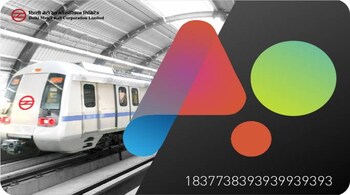
Once Metro services resume, Delhi Metro commuters will be able to use a smart card which comes with an auto top up feature that enables them to recharge it automatically at Automatic Fare Collection (AFC) gates of the Metro stations.
The feature comes handy during COVID-19 times when a new travel protocol (whenever Metro services resume) that calls for social distancing and contact-less services needs to be adhered to.
This new measure will eliminate the need for queuing up at the Metro Stations to recharge the Smart Card. Generally, even in case of online recharges, the card needs to be presented to Add Value Machines (AVMs) for the store value to get validated; ‘Autope’ eliminates the AVM layer as well, DMRC officials said.
This new Smart Card is available for customers through the App ‘Autope’ which is specially developed for this purpose, DMRC officials said.
The Smart Cards issued by the ‘Autope’ will offer auto top-up functionality whenever the value of Smart Card goes below Rs 100 and will automatically recharge the card with Rs 200 at the Automatic Fare Collection (AFC) Entry Gate itself. ‘Autope’ will auto-debit the top up value from customers’ linked card/bank account the next working day.
To avail the services of ‘Autope’ Smart Card, the users will be required to register by downloading the ‘Autope’ app (available on Google Play store for Android users and Apple store for Iphone users) or register at Autope’s mobile site autope.in and link their Bank / Credit Card / UPI account to the Card as a onetime exercise.
A nominal fee (maximum of 1%) will be charged as convenience fee from the customer for each transaction, they said.
In addition, those commuters who already have existing Delhi Metro Smart Cards can also get the Auto Top Up feature enabled in their cards by registering through this App (Autope). Existing card holders need to visit the Customer Care Centre of any of the Metro stations after three days of registration to get their smart cards activated for this facility as a onetime exercise.
Apart from auto-top-up facility, the benefits extended by ‘Autope’ also include home delivery of New Cards, besides their customisation facility and 5 percent additional discount on each top up.
‘Autope’ smart cards are supported by auto debit facility for recurring payments launched recently by National Payment Corporation of India (NPCI) and it allows the customers to setup UPI Mandate for their Metro payments. ‘Autope’ is developed by M/s Anduril Technologies Pvt. Ltd. in association with DMRC and NPCI.
“This initiative is in line with the DMRC’s commitment towards supporting the digital drive to promote cashless transactions among the Delhi Metro commuters. This new feature/card empowers a commuter to get his/her smart card auto topped up at AFC Gates across the network which will help him/her to have seamless travel without worrying about top-up from time to time,” said Mangu Singh, Managing Director, DMRC.
Discover the latest Business News, Sensex, and Nifty updates. Obtain Personal Finance insights, tax queries, and expert opinions on Moneycontrol or download the Moneycontrol App to stay updated!





