

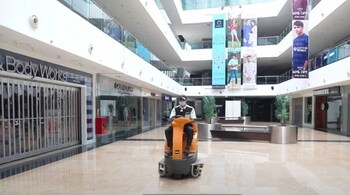
A few mall operators have announced blanket deals for their retail tenants in their properties that include letting go of rents anywhere between 50 percent to 100 percent during the lockdown period but any prolonged mall closure, rent waivers is expected to lead to operating income of owners declining by 45 to 60 percent, an analysis by ICRA Research has said.
The contagion fears as well as the possible impact on disposable income of the consumers will also lead to low footfalls in malls throughout the year.
Further, people may fulfil their shopping requirements through e-commerce platforms or through local retailers in the near term, which may also impact the footfalls. In such a scenario most of the leveraged malls will have to take measures to fund the cash flow mismatches which are expected in the current year, it said.
Broadly the mall operators are agreeing to let go of the rents anywhere between 50 percent to 100 percent during the lockdown period and the quantum depends on the balance sheet strength of the mall operator, the competitive advantage of the property and the bargaining power of the retailer, it said.
The mall operators, recognising a possible weakness in the performance of the retailers even after resumption, are offering a staggered reduction in discounts over the next two to three quarters. At the same time, the operators are also imposing terms like no near-term lease terminations and increased revenue share component for the residual period of FY2021.
ICRA notes that some of the vanilla or standalone retailers might not be able to resume operations even after the rental waivers due to weakening of their financial position. More than normal vacancy during FY2021 due to the same will pose a downside risk to the estimates.
“We believe that the lenders will play a critical role by supporting the mall operators and revisiting the repayment terms. Capitalisation of accrued interest, sanction of new debt facilities and extension in the repayment schedule will be some of the means through which the immediate impact on debt servicing can be mitigated. Hence, players with healthy financial flexibility will be able to mitigate the risks more effectively,” said Anand Kulkarni, Assistant Vice President and Associate Head – Corporate Ratings, ICRA.
Entities with strong parentage will be better placed to receive promoter’s support to fund the deficit. Some players with diversified assets – apart from the retail segment on the balance sheet – will also be able to sail through the crisis comparatively better than the companies with standalone assets, he said.
The increasing spread of the COVID-19 pandemic in India, starting from mid-March 2020 and the resultant preventive measures taken by the Central and various state governments have severely affected retail mall operations.
As per ICRA's research, the mall operators have been significantly impacted due to the closure of operations for around three months.
Also Read : Mumbai’s nearly trillion-dollar real estate market set to see greatest wealth erosion in history
Mall operators generate almost complete income from the lease rentals received by the tenants. The retailers have been severely impacted and revenues for most of them have been reduced to zero during the closure period. Rental expenses form a sizeable share of the 12-16 percent of the revenues for retailers, therefore, in line with expectations, the tenants have been negotiating with the mall operators for a waiver or rebate on the rentals.
ICRA notes that the mall operators and tenants are long-term business partners with lease tenures of up to 30 years in some cases. A disruption of three to six months is a relatively small period and hence both parties are willing to resolve the issues.
Discover the latest Business News, Sensex, and Nifty updates. Obtain Personal Finance insights, tax queries, and expert opinions on Moneycontrol or download the Moneycontrol App to stay updated!





