

The thirteen-year-old boy standing on the veranda edged closer to his mother, his fingers reaching out for hers. A thick clump of trees on one side prevented them from seeing fully what was going on below and a little way away, but it didn’t cut off the sounds of anger and violence. The sun had barely risen. It was a monsoon morning, the air heavy with moisture.
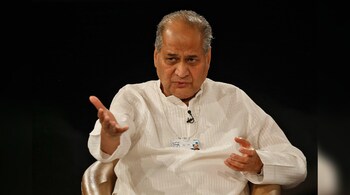
‘My mother and I were standing on the balcony of the old house. There had been tension in the air all through the night. At the time I did not know what was wrong . . . . Suddenly we saw flames. Later I found out that the workers had overturned a police jeep and had torched it. A few moments later, there were gunshots,’ recalls Rajiv Bajaj, now thirty.
Events at Bajaj Auto started getting out of control on the evening of June 16. Two workers called for a tool-down strike, but when the management sought an explanation from Chatterjee, he disowned the action. The management then warned the two workers in writing against indulging in ‘unauthorized’ actions. Interpreting this as a charge-sheet, they and their supporters walked out and squatted on the lawns in front of the factory building. According to the police commissioner, the security officer’s provocative language to the workers triggered off the trouble. The workers went berserk and began breaking the window panes. When the police were summoned later, they showered metal equipment spares on them, injuring about twenty-five policemen.
Before that, they stormed the head office. Rahul Bajaj was working on the first floor of the old office building. ‘Our chief security officer’s head was gashed from the stone throwing but four watchmen reached my office before the workers came charging up. Somehow they contained them. There was some slogan mongering and speechofying (sic). After the police came, they dispersed.’
But not to bed. Tension built up during the night, and the management called in the police to stand in front of the gate to prevent further damage when the factory re-opened the next morning. The workers began trickling in from 6.00 a.m., but within the hour, were in the grip of a mob mentality. About 900 workers turned violent and upturned a police wireless van and burnt it. The police fired tear gas shells which the mob hurled back, along with stones and metal parts. The workers threw acid and rolled barrels across the road to prevent the police from following them. Then they made bonfires out of wooden cartons and scrap. Unable to control the situation, the police fired twenty-nine rounds. Two workers and one bystander were killed. Forty policemen were injured.
Maharashtra’s home minister, Bhai Vaidya—a former trade union leader, incidentally—immediately instituted a judicial inquiry. While it dragged on, Chatterjee and Bajaj arrived at a settlement, and the factory reopened after five months. But to date no worker reports for work on June 17. On that day, the conveyor belts don’t move, there’s no clash of steel on steel, no sparks fly from the welding machines.
Fourteen years after the incident, the Bombay High Court fined thirty-one workers Rs 100,000 each. These were the highest ever fines imposed on workers. A lower court had earlier sentenced them to three years of hard labour. Significantly, there has been no strike at the Akurdi plant since then (though there was an eight-month lock-out at the Waluj plant in 1987).
Bajaj attributes this remarkable peace to the fact that ‘somehow, we managed to create a situation of win-win and relations became better and better, and that is how my relationship with Chatterjee became excellent. After that we signed another agreement. And after Chatterjee died, we signed another agreement with his main deputy Ambedkar when everything was beautiful.’
Bajaj, the only industrialist at Chatterjee’s funeral, is all praise for his antagonist: ‘He was a gentleman. I don’t know the inside story of the man, but he lived simply. He used to ride a bicycle. Even in the '70s, union leaders used to ride in cars, or on scooters at the very least. But not Chatterjee. He used to eat chanas and dressed absolutely like a worker.’ Bajaj has less kind words for the workers. ‘After so many years, what is the point of staying away from work, losing production and wages?’ he asks acerbically. ‘Why don’t they work and donate part of their earnings to the families of the three men who died?’
Such pragmatism is Bajaj’s hallmark. It has earned him a rare reputation as one of India’s most successful industrialists. Successful people tend to be highly entrepreneurial but oddly enough Bajaj doesn’t quite fit the bill. Compared to his peers in this book, Bajaj appears colourless rather than dynamic. Squeaky clean, he has never been involved in shady takeovers. He doesn’t engage in street fights with other industrial magnates, nor has he ever hijacked someone else’s project. He hasn’t burnt tyres during a hard drive for meteoric growth. On the contrary, he is something of a plodder, routinely burning the midnight oil, and devoted to the virtues of hard work. Yet he is India’s most admired industrialist along with Dhirubhai Ambani and the late Aditya Birla.
Discover the latest Business News, Sensex, and Nifty updates. Obtain Personal Finance insights, tax queries, and expert opinions on Moneycontrol or download the Moneycontrol App to stay updated!





