

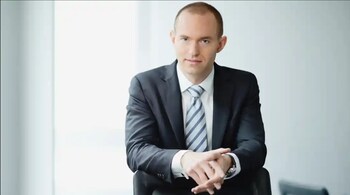
The sale of three Libyan cement factories was finalised last year not in Tripoli or Benghazi, but in a townhouse in London’s Mayfair. The buyer’s links to eastern Libya’s power structure raised eyebrows. But for several people involved, the most sensitive detail was something else entirely: one of the plants’ legacy investors was Jan Marsalek, the former Wirecard executive who vanished in 2020 and is now believed to be under Russian state protection, the Financial Times reported.
Marsalek is wanted across Europe for his role in one of the continent’s largest corporate frauds. He is also suspected of having worked as a Russian agent of influence. For years, two questions have hung over his disappearance: where did the money go, and how was it used? An investigation drawing on leaked documents, court filings and internal emails now sheds light on one corner of that puzzle, in Libya.
From fintech star to shadow investor
Before Wirecard collapsed, Marsalek was a celebrated executive with access to vast sums of illicit cash. He channelled part of that money into high-risk overseas projects that mixed commercial logic with geopolitical relevance. Libya, fractured by war but rich in strategic assets, proved especially attractive.
Through layers of offshore structures and silent partnerships, Marsalek invested in Libyan infrastructure, including cement factories crucial to reconstruction and drilling companies tied to the oil sector. His name never appeared on formal ownership documents. Instead, money moved through Cyprus, Dubai, Singapore and the Isle of Man, often fronted by associates or shell entities.
Cement, reconstruction, and leverage
One early investment involved Libya’s largest cement producer, a business whose value rested on a simple reality: rebuilding a shattered country requires cement, and controlling supply creates leverage. Marsalek entered the deal quietly, as a hidden partner, while the London-based Libya Holdings Group publicly denied any knowledge of his involvement.
Emails reviewed by investigators tell a different story. Marsalek was in regular contact with senior managers, advising on banking relationships and even facilitating the use of Russian mercenary contractors to clear unexploded ordnance from factory sites. His role went far beyond that of a passive investor.
A bigger bet on oil-linked assets
Cement was only part of the picture. Marsalek also became the main financial backer of a Libyan oil-services company that rents drilling rigs to international energy firms. Millions of dollars were routed into the venture using funds siphoned from Wirecard, with elaborate structures designed to disguise the true beneficiary.
At various stages, lawyers, offshore trusts and named intermediaries appeared as the supposed owners. Later due diligence quietly revised those declarations. People involved in setting up the arrangements say the reality never changed: Marsalek controlled the stake.
Influence, politics and proximity to power
Marsalek’s Libya activities were not limited to balance sheets. He cultivated relationships with businessmen, militia-linked figures and political operators in the east of the country, an area strongly influenced by Russia-backed forces. Photographs and witness accounts place him in Benghazi meeting senior commanders aligned with General Khalifa Haftar.
According to people present, Marsalek spoke openly about Libyan politics, floated ideas about grooming political candidates and positioned himself as a bridge between money, security and foreign backers. This blend of finance and access mirrored the role Western intelligence agencies believe he played elsewhere: using capital to open doors that served Moscow’s interests.
Collapse, flight and a scramble for assets
When Wirecard imploded in 2020, Marsalek fled. Suddenly, the man who had hidden his wealth so carefully found himself unable to control it. His Libyan holdings became vulnerable. Capital raisings diluted his stakes. Former partners moved to acquire assets cheaply. Legal disputes followed, particularly in London, where competing claims now hinge on whether funds are considered criminal proceeds that must remain frozen.
Marsalek, communicating from Russia, complained privately that others were trying to steal “his” money, assuming he was powerless to stop them. Whether he still exerts any influence over these assets remains unclear.
Why Libya still matters
Libya occupies a special place in Russia’s strategic thinking: a gateway to Africa, a pressure point on Europe, and a theatre where money, arms and influence intersect. Against that backdrop, Marsalek’s investments take on wider significance. They show how financial crime, corporate fraud and geopolitical manoeuvring can overlap quietly, years before authorities catch up.
The missing millions are not just about personal enrichment. They offer a case study in how illicit funds can be repurposed into long-term influence, using unstable regions and opaque financial systems as cover. In that sense, Libya may be only one chapter of a story that is still unfolding.
Discover the latest Business News, Sensex, and Nifty updates. Obtain Personal Finance insights, tax queries, and expert opinions on Moneycontrol or download the Moneycontrol App to stay updated!





