

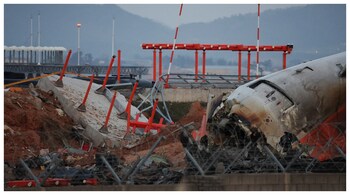
The crash of Jeju Air Flight 2216 that killed 179 people in December is drawing renewed scrutiny after investigators revealed that the pilots may have shut down the aircraft’s less damaged engine following a bird strike—leaving the plane running on a fire-damaged engine with reduced power. The decision likely caused a loss of thrust and electrical systems, which contributed to the gear-up belly landing that ended in tragedy, the New York Times reported.
What happened in the final minutes
According to investigators, the aircraft was hit by birds at 8:58 a.m. near Muan International Airport in South Korea. Seconds later, the pilots shut down the left engine—believed to have been the less damaged of the two. Within five seconds of the engine shutdown, the plane's flight data recorders lost power, cutting off critical information about what happened during the final four minutes before the crash.
Investigators said the plane attempted a turnaround and tried to land from the opposite direction, but the landing gear was not deployed, and the plane skidded along the runway on its fuselage before slamming into a concrete wall and bursting into flames.
Gaps in data raise more questions
The shutdown of the functioning engine may have inadvertently disabled the aircraft’s main power systems, including cockpit instruments and automatic controls. With electrical power down and no flight data recorded after 8:58:50 a.m., officials say they cannot yet confirm how much visibility the pilots had into the condition of either engine.
Aviation safety expert Joe Jacobsen told The New York Times that if the displays went dark, the crew may not have known which engine was actually failing. US experts say the damaged right engine continued to burn and emit black smoke until impact, suggesting it provided limited thrust, but not enough to sustain flight.
Why this mistake matters
Misidentifying the source of engine damage has led to fatal crashes before, including the 1989 Kegworth Air Disaster and the 2015 TransAsia crash, where pilots shut down working engines, causing deadly power loss. Without thrust and onboard electrical systems, crews must switch to manual emergency protocols—a challenging scenario, even with extensive simulator training.
Victims' families demand accountability
Relatives of the crash victims expressed anger during a Saturday briefing in Seoul, calling the interim findings insufficient and accusatory. Officials cancelled a planned press conference after some relatives forcibly disrupted the event. Families say the report seems to shift blame toward the pilots and birds without presenting conclusive evidence.
Ko Jae-seung, who attended the briefing, said many families were left with unanswered questions about why the backup generator may have failed and why the pilots didn’t manually lower the landing gear. Investigators confirmed that feathers were found in both engines, but emphasized that no mechanical faults were found before the flight.
Next steps in the investigation
The Korea Aviation and Railway Accident Investigation Board, in collaboration with U.S. and French experts, plans to complete its full investigation by June next year. They have not yet commented on the status of cockpit displays after the bird strike or whether crew protocols were properly followed.
Experts say drawing conclusions now would be premature. “If both engines were damaged and they had no way of knowing,” Jacobsen said, “that changes everything.”
Discover the latest Business News, Sensex, and Nifty updates. Obtain Personal Finance insights, tax queries, and expert opinions on Moneycontrol or download the Moneycontrol App to stay updated!





