

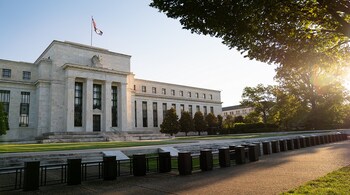
The 2008 financial crisis and its aftermath vaulted central bankers from obscure technocrats to leading actors in the global economy.
Institutions that had been known for a behind-the-scenes role mostly tweaking interest rates took on the mantle of Marvel-style first responders. Policymakers such as Federal Reserve Chair Ben Bernanke and European Central Bank President Mario Draghi became household names, popping up on primetime television slots or taking center stage at major conferences. Mark Carney, former head of both the Bank of Canada and the Bank of England has launched a bid to replace Justin Trudeau as head of the Liberal Party of Canada. The current Bank of England governor, Andrew Bailey, has even taken to TikTok to explain policy.
That’s quite a journey for institutions that as recently as the turn of the century were reluctant to issue press releases. But the newfound fame hasn’t come without controversy.
In the US, President Donald Trump has consistently criticized the Fed. He has said he should be allowed to influence Fed policy, then walked that back, claiming he merely has a right to say what he thinks interest rates should be. In his Davos address, he said he would “demand that interest rates drop immediately,” adding that “they should be dropping all over the world.”
Trump’s critics in turn have compared his approach to that of Turkey’s Recep Tayyip Erdoğan, who has repeatedly intervened in the nation’s central bank. But it’s not just the political right that hopes to exert influence over central bankers.
Around the world, criticism emanates from across the political spectrum. Critics on the left contend that monetary policy has propelled inequality by fueling massive gains in financial markets and house prices for the benefit of those who already own assets — and at the expense of those who don’t.
Now, political theorists are getting in on the game, including the academic Leah Downey whose recent book Our Money: Monetary Policy As If Democracy Matters questions the merits of central bank independence. For Downey, the question is “how the creation of money and monetary policy can be more democratic.”
In her book, Downey, who is a research fellow at the University of Cambridge, argues that placing so much power in the hands of unelected officials has helped to fuel a backlash among the public that has eroded confidence in expertise and authorities. The question for her is not how to insulate central bankers from politicians. Rather, it’s how to get the right balance between allowing monetary policy experts to do their job and ensuring democratic oversight.
There’s a long history to this balancing act. The world’s first central bank was set up to keep its distance from both a monarch and his people. Sweden’s Riksbank was founded in 1668 by three of the four groups that comprised its political assembly. The nobles, clergy and burghers agreed a bank would be useful. But the peasants — essentially small landholders — are said to have deferred to the rest of the council, claiming that “that they had no understanding of the matter,” according to a history published by Riksbank, “[and] because their Estate would have nothing to do with [the bank].”
The Riksbank operated with a form of independence for a time, reporting to parliament rather than the crown. But in 1689, King Charles XI put an end to all that, declaring that the rules of absolute monarchy applied to the bank.
In the US, the Fed was established in 1913, as a response to frequent banking panics. Its distributed system was a compromise between banks’ desire for a private institution and reformers’ desire for a new government agency.
“The Fed has never been fully independent,” says David Wheelock, a senior vice president at the Federal Reserve Bank of St. Louis. The Treasury secretary initially chaired the Fed’s board, and during World War II the bank agreed to help the Treasury hold down yields in order to finance the war.
The path to modern independence didn’t begin until 1951, with an agreement between the Fed and Treasury acknowledging the central bank’s freedom to manage monetary policy. For decades afterward presidents of both parties applied pressure, sometimes directly and sometimes through the Treasury.
Downey argues against granting wholesale central bank independence on the grounds that lawmakers outsourcing such critical decisions on the economy is neither economically prudent nor democratic. A healthy democracy is one where the balance of power over money creation is tilted toward elected lawmakers, Downey argues. Society should be able to draw on expertise without being ruled by experts.
Downey divides her book into sections that offer a sweep of the plumbing role that central banks play and the history of their autonomy. There’s an explainer on the role the Fed plays in domestic financial architecture and also in economic statecraft, by pumping dollars via swap lines to select economies during times of crisis. (The book is nosed on the Federal Reserve, but applicable for most developed economies.)
Downey’s central premise is philosophical: Too much independence in such a central area of policymaking is inconsistent with democratic theory. Instead of granting central banks blanket independence, Downey’s ideas include a periodic charter review of the Fed that would allow an opportunity to renew the mission for the central bank and its aims.
She believes Congress should be given a role in credit guidance as well. The idea would be to establish something close to the appropriations procedure for credit — where an annual Congressional vote would indicate what types of lending to encourage and to where, and what to discourage. That would force Congress to scrutinize and familiarize itself with the system and enforce its oversight of the Fed. Congress already oversees the budgets of other agencies and programs, Downey argues, so it’s a logical step to include the Fed.
But allowing central banks to operate out of arm’s reach of their political masters has its defenders. “Economists overwhelmingly support the concept of an autonomous or independent central bank,” three of them wrote in a research review last year. And for decades, studies have generally concluded that central bank independence is associated with lower inflation.
However, researchers also distinguish between “political” independence and “operational” independence at central banks. The former includes things such as the ability to set goals and fire officials; the latter is about day-to-day autonomy in setting interest rates. While the European Central Bank is highly independent on both measures, most “independent” central banks are very operationally independent but only somewhat politically so. And in rich countries, it’s the operational side that seems to matter: The freedom to set interest rates day-to-day is correlated with lower inflation, but political independence is not.
One thing everyone seems to agree on is that the threat to central bank independence is real across the globe. The Thai government has been looking for ways to increase its influence over the central bank, and India’s government partly blamed the central bank’s tight monetary policy for the economy’s weak performance.
To defenders of central bank independence, this isn’t an accident: Historically, politicians meddle with central banks not to defend the interests of those without assets, but in the hopes that (usually) looser monetary policy could help secure their electoral success or quell threats to the regime.
Downey makes the case that any economic benefits do not outweigh the hit to democracy. She thinks the due diligence that lawmakers conduct around money creation will improve their policymaking — and help restore the trust of their electorate.
Writing on central banking is a challenge at the best of times and Downey warns readers up front that her arguments are not for the faint-hearted. But the book is meticulously researched, topical in an era of deepening inequality and poses important questions for even the most ardent defenders of central bank independence.
Since 2008 there has been “a lot of questioning and challenging and probing of the dominance of economic theory but central bank independence has been unquestioned,” she said in an interview.
Some defenders of Fed independence, including Harvard economist Kenneth Rogoff, have argued that central banks are, to a degree, “victims of their own success.”
“Inflation has been so low for so long that people have started to forget what it was like in the pre-central-bank-independence era,” he wrote in 2019 in an essay taking aim at various central-bank dogmatisms.
But inflation came roaring back, and it hasn’t seemed to quiet central bankers’ critics — as Downey’s book illustrates. She has succeeded in making the case for a fresh look at the role central banks play in democracies. And she’s right that as central bankers have become the caped crusaders of the global economy, one of the least democratic forms of economic policymaking has become one of the most influential.
Discover the latest Business News, Sensex, and Nifty updates. Obtain Personal Finance insights, tax queries, and expert opinions on Moneycontrol or download the Moneycontrol App to stay updated!





