

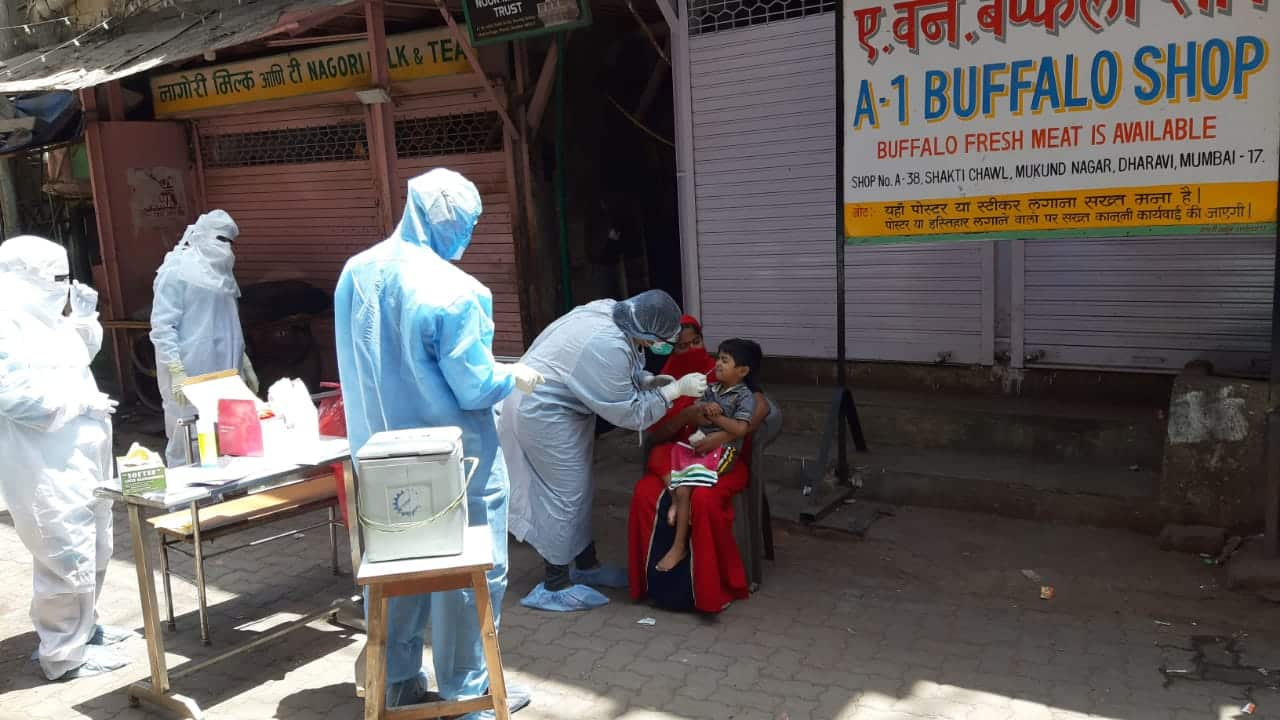
When Dharavi in Mumbai reported its first case of COVID-19 in early April, experts had warned that the densely populated region, known to be Asia's largest slum, could fast become a major hotspot — not just in the Maximum City, but also the country.
The experts were right. Dharavi became a COVID-19 hotspot quickly as infections in the area began to rise. It remained one of the worst-affected regions in the worst-affected city in India. But come June, Mumbai's civic body, the Brihanmumbai Municipal Corporation (BMC), has managed to turn things around a bit.
"COVID came to Dharavi with a death," says Kiran Dighavkar, Assistant Commissioner of G-North ward and the official who has been leading the fight in Dharavi from the front. Dighavkar was referring to the first case in Dharavi, when a 56-year-old man died due to complications from the disease.
"We realised that in Dharavi, things could go south quickly, and we started taking measures accordingly. We acquired different schools, sports complexes, marriage halls etc for institutional quarantine and started shifting symptomatic people to them because home quarantine in Dharavi is impossible," Dighavkar told Moneycontrol.
The civic body also started running fever clinics and sending in teams to check temperatures and oxygen levels and isolating those with suspected symptoms or at risk, all the while battling unique psychological and social factors.
Initially, said Dighavkar, the civic body had to face some problems.
"There was fear in the initial days, so building trust between the government and the community was important. People were scared about where the government might take them, whether treatment would be provided properly," the official said. Eventually, however, confidence was built by providing adequate and proper facilities in the quarantine centres.
"We would tell those who were showing symptoms that if you go to institutional quarantine, there are doctors there to take care of you, free medicinal facilities, food and free testing. That proved to be a game-changer," Dighavkar said.
And the game, as of now, seems to have changed indeed. Compared to early May, fresh infections are down to a third, according to a Bloomberg report.
Moreover, those sick are recovering, and in the fortnight since the start of this month, deaths due to the disease have decreased. On June 7, for instance, Dharavi reported 11 cases, the area's lowest in a single day since the start of the outbreak. Of the 77 deaths in the region, only six have been reported in June.
"Another important aspect was the involvement of local, private doctors. In other places, the doctors closed down clinics due to the fear of the virus, but in Dharavi, the local doctors were provided PPE kits, thermal scanners and oximeters, and they began door-to-door screening," Dighavkar said, adding that the doctors also opened up clinics and started attending to patients and told those suspected of being infected to go to institutional quarantine.
The fight, officials stress, is not over, but there certainly seems to be improvement. Fresh daily infections are down to 20 on an average from around 60 in May, and the mortality rate has reduced. With the onset on monsoons in Mumbai, fresher challenges await, but Dighavkar said the testing and screening would continue.
"The reduction in cases doesn't mean we are going to wrap up or anything. We are going to keep on screening, and encouraging people to come to us if they show any symptoms," Dighavkar said.
Discover the latest Business News, Sensex, and Nifty updates. Obtain Personal Finance insights, tax queries, and expert opinions on Moneycontrol or download the Moneycontrol App to stay updated!





