

The NDA government, after its massive victory in the 2019 Lok Sabha elections, has come up with the proposal of ‘One Nation One Election’ for further elections in the country.
The largest democracy in the world holds elections in four major dimensions as of now – General Elections (Lok Sabha), State Assembly Elections, Rajya Sabha Elections (Upper House) and local body elections.
However, some politicians, including former Jammu and Kashmir chief minister Farooq Abdullah, ascertained that the One Nation One Election theory shouldn’t affect the federal structure of the Indian Constitution and only a special committee should decide the consequences and implementation of simultaneous polls.
The CPI(M) general secretary Sitaram Yechury and CPI leader D Raja have vehemently opposed the idea of simultaneous polls, calling it undemocratic, and anti-federal, and a trigger for compromising the ‘people’s mandate’.
An all-party meet was held on June 19 to discuss the advent of simultaneous polls. While some parties rendered support and consideration, eminent leaders like West Bengal Chief Minister and Trinamool Congress (TMC) satrap Mamata Banerjee, Bahujan Samaj Party (BSP) chief Mayawati and Telangana Rashtra Samithi (TRS) supremo K Chandrashekar Rao skipped the discussion.
What is the 'One Nation One Election' system?
The current electoral system of the country holds separate polls for the Lok Sabha and state Assemblies in a gap of five years, i.e. when the tenure of the Lower House or the state government concludes, or either of them is dissolved prematurely.
The term of state assemblies may not necessarily be in sync with one another or that of the Lok Sabha. As a result, the mammoth task of conducting elections goes all round the year.
One Nation One Election proposes that simultaneous elections be held in all states and the Lok Sabha in a gap of five years. The idea behind it is envisaging an amendment in the entire electoral system of the country where elections to the states and Centre synchronise.
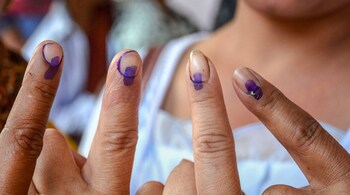
Listed voters shall cast their votes at the same time and the same day for both Lok Sabha and state assemblies.
History
Simultaneous polls to states and Lok Sabha is not a newly conceived norm. In fact, simultaneous elections have previously been conducted in India in 1952, 1957, 1962 and 1967.
Soon after, this norm was discontinued following the dissolution of some Legislative Assemblies between 1968 -69. Since then, the Indian Electoral system holds polls to Centre and states separately.
The BJP government, after coming to power in 2014, had put forward a strong pitch for the conduct of simultaneous elections in the country. The Opposition parties had argued that such deliberations will adversely affect the federal nature of the Indian political system.
However, on August 30, 2018, the Law Commission submitted a draft report endorsing the implementation of simultaneous polls, recommending changes to the electoral laws and Articles pertaining to the same.
Implementation
Beyond political parties going against this proposal, the main task of executing the 'one nation one election' theory lies with unavoidable Constitutional problems.
For simultaneous polls, there has to be a political consensus pertaining to the changes in the electoral system. Furthermore, amendments to the Constitution need to be formulated.
To start the execution of 'one nation one election', one of the options is that polls to states and Union Territories have to be synced by 2021, and then fresh simultaneous polls should be held from 2024 onwards. However, Constitutional defaulters still linger.
Few of the important Articles that need to be amended for implementation of 'one nation one election' are:
Article 172 and Article 83 deal with the duration of the Houses of Parliament, and guarantees a five-year term to both the elected Lok Sabha and state assemblies, unless they are dissolved sooner.
Article 85 of the Indian Constitution deals with the powers of the President to summon Parliamentary sessions, not exceeding a gap of more than six months. The President also carries the power to adjourn either House of the Parliament and the dissolution of the Lok Sabha.
Article 356 of the Indian Constitution, comes into action in case of governance and constitutional failure in a state and deals with the President’ Rule. Amendments in the People’s Representation Act, 1951(RPA Act 1951) and the Anti Defection Law must be made for organised conduct and stability in both Lok Sabha and state assemblies.
What is the primary debate around One Nation One Election?
The primary cause of concern amongst parties that have opposed simultaneous polling is that of Constitutional glitches and anti-federal consequences.
Some believe that this shall impact the voting judgement of the people. Further, this new process shall require manpower and machinery (EVMs and VVPATs) on a humongous scale.
Ideally, the ‘one nation, one election’ system should reduce the amount of time, energy and resources invested in the conduct of polls. If simultaneous polls do reduce the duration of conducting polls, political parties will have ample time to address national issues and enhance governance.
Discover the latest Business News, Sensex, and Nifty updates. Obtain Personal Finance insights, tax queries, and expert opinions on Moneycontrol or download the Moneycontrol App to stay updated!





