

Amongla N Jamir
“... too many people on too little lands” wrote Sanjoy Hazarika in the Strangers of the mist. Tales of war and peace for India’s Northeast, while referring to Bangladesh and her ‘Malthusian nightmare’. When the lands are unable to support the teeming population of Bangladesh, then the neighbouring countries can be their refuge.
The international borders of Bhutan, China, Myanmar, Bangladesh and Nepal are connected to the Northeast states in India. Almost all these states preferred to stay out of the Indian union after Independence because it was a testament of appropriation by the colonialists whereby India got this region as a colonial legacy and an inheritance by default. So, the frequent use of the words ‘separatism’ or ‘secessionism’ to describe the early struggles of the Northeast can be misleading as they were not trying to separate from the Indian union but were requesting the external country to leave them.
The porous India-Bangladesh border has been a great cause for concern in the Northeast. It is known for illegal movement of people, goods and trafficking as well as brisk trade of textiles, consumer goods etc. Inter-state refugees in need of repatriation, Rohingyas, Bangladeshis or Burmese refugees, accounted or unaccounted, share the same global problem of stateless people while the Northeast is the unwilling host.
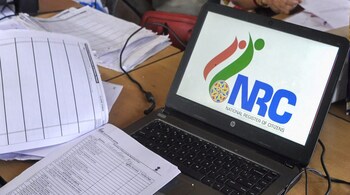
The background of the National Register of Citizens (NRC) in Assam has always been to identify the ‘sons of the soil’ — this finds equal resonance throughout the Northeast. The NRC, the RIIN (Register of Indigenous Inhabitants in Nagaland) and similar exercises are not fuelled by xenophobia but by a rightful claim of the indigenous population to assert their identity.
The NRC, which began in 1951, is a list of all genuine Indian citizens. On August 31, around 1.9 million people (out of the 32.9 million applicants) did not find a spot on the list. The drastic change in Assam’s demographics and the fear of identity loss ignited the Assam movement (1979-85) and today, the vigour of that philosophy is still relevant. This exercise has seen its fair share of hiccups with genuine citizens also being left out from the registry.
Critics say the NRC is a bureaucratic mess, detention camps are horrible, families are torn apart but a mess which has to be cleared anyway. The Government of India will establish 200 new foreign tribunals in addition to the existing ones to redress grievances. Till then, the excluded people from the register will carry the tag of a ‘foreigner’ and bear the psychological pressure it brings.
The Manipur’s Peoples’ Protection Bill, Mizoram’s Maintenance of Household Registers Bill, Nagaland’s 371(A), Tripura, Assam, Meghalaya and Mizoram’s protection through Articles 244(2) and 275(1) are constitutional safeguards. Equally important is the Inner Line Permit (ILP) protection for Nagaland, Mizoram and Arunachal Pradesh. We cannot deny the fragile position of India being flanked on either border by two Islamic nations, especially now when India under the Bharatiya Janata Party (BJP) has a tendency of occasionally flexing muscles of a communal colour.
The drive against illegal migration in Nagaland was first initiated in Mokokchung district by the NGO Survival Mokokchung and the Ao apex tribal students body Ao Kaketshir Mungdang, in 2007. This was a successful exercise in which the local markets held by illegal migrants were given back to the local people. Despite this, and close monitoring of Mokokchung town, about 100 Illegal Bangladeshi Immigrants (IBI) were caught during a surprise checking on December 22. Today, it is estimated that there are over 500,000 IBIs in a small state like Nagaland.
The smarter IBIs enter into commercial business of clothes, Chinese goods, vegetables, poultry, etc. while the rest work as cheap unskilled labour. They are hard workers, willing to work for almost nothing and shrewd enough to sometimes marry the local girls whereby the offspring become leverage for consolidating their population. The workers from Bihar and Uttar Pradesh are at a loss with their higher municipal rates than the IBIs.
Nagaland recorded a significant population growth in 1981-1991 with 56.08 per cent to 64.41 per cent in 1991-2001. Interestingly, the districts of Dimapur and Wokha, bordering Assam with porous borders, recorded an abnormal high rate as projected by Agarwal and Kumar in ‘Nagaland’s Demographic Somersault: An Empirical Investigation’. It shows Nagaland as having the distinction of being a state in India with a decline in population in 2001-2011. The inconsistent demographics are attributed to the ‘unaccounted international migration and manipulation of the census due to competition of state resources’.
Recently, the Nagaland government announced the RIIN exercise to register all the indigenous inhabitants of the state. After the NRC in Assam, all the Northeast states are on high alert as the illegal migrants who do not find a place in the August 31 list are expected to settle elsewhere in the region.
The BJP manifesto declared the NRC to be made applicable all over India. If this becomes a reality then the Northeast will be able to breathe freely. Ultimately, it is the integrity of the nation that matters because the illegal migration is actually a national problem — because when programmes such as the NRC tighten its grip in the Northeast, illegal migrants might end up in other states, say in West Bengal or even down south in Kerala.
Amongla N Jamir is assistant professor, Fazl Ali College, Mokokchung, Nagaland. Views are personal.
Discover the latest Business News, Sensex, and Nifty updates. Obtain Personal Finance insights, tax queries, and expert opinions on Moneycontrol or download the Moneycontrol App to stay updated!





