

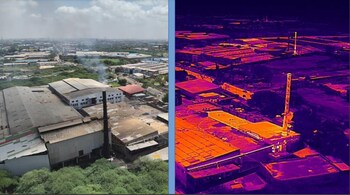
When we imagine satellites in space, we usually think of them taking pictures of the Earth which are later transformed into maps—perhaps even live visuals of landscapes. These images typically rely on visible light, which is only a small slice of the electromagnetic spectrum. But there’s a much larger, more powerful way to observe the Earth—through infrared, or what we often refer to as ‘thermal imaging’.
So, let us first unpack this concept. Simply put, infrared imaging allows us to see heat. Everything emits thermal radiation (or radiates heat) to some degree or the other. Unlike visible imaging, which only shows us what something looks like, thermal imaging tells us how it is behaving. For instance, a forest fire just beginning under a canopy of a thin cloud cover might escape detection in visible imagery but will immediately show up in thermal readings.
This kind of space-based thermal monitoring has enormous value. In a world burdened with rising temperatures, unpredictable weather, and frequent natural disasters, real-time thermal data can help governments, researchers, and businesses plan better and act faster.
Why infrared matters India’s geography, economy, and population density make it especially vulnerable to the effects of climate change and resource stress. Space-based thermal imaging offers direct support for several critical areas. In agriculture, for example, water use efficiency is low, just 25–35%, which means that approximately 70% of irrigation water is lost before it even reaches crops. This contributes greatly to crop stress (adverse conditions affecting crop growth) and low yields. Thermal imaging helps detect crop stress days or even weeks before it becomes visible to the naked eye. This, in turn, gives farmers enough time to respond and save yields.
Beyond agriculture and urban planning, thermal intelligence plays a crucial role in tracking greenhouse gas emissions—one of the planet’s most pressing challenges. Advanced thermal imaging enables the identification of methane leaks from oil fields, landfills, and agricultural sites that are often invisible to conventional monitoring.
Cities, too, benefit from thermal imaging. Urbanization has led to 60% more night‑time warming in more than 140 Indian cities compared to surrounding rural areas. Between 2022–2023, daily peak electricity demand in India rose to over 220 GW during heatwave events—a 23% increase compared to normal seasons—driven by increased cooling loads. With the rapid growth of urban heat islands—localized zones of elevated temperatures—thermal data can guide smarter urban design, from rooftop materials to green cover planning. Timely infrared insights can reduce costs, improve outcomes, and support more sustainable growth.
The strategic case for thermal imaging Beyond civil applications, infrared imaging plays a crucial role in facilitating national security. Unlike visual sensors, which can be blocked by darkness, thermal sensors continue working through most atmospheric conditions, even at night, detecting hidden infrastructure and energy use patterns.
Currently, only a few countries operate dedicated infrared satellites, primarily for defense. However, civilian access to thermal data is often limited or delayed, especially when the data originates from foreign-owned satellites.
But what will it take to bridge the gap? Building a strong thermal imaging program is no small task. Infrared sensors require precise calibration, are sensitive to temperature fluctuations in orbit, and generate large volumes of data that need to be processed intelligently. But recent advances in satellite miniaturization and onboard computing have made it possible to build compact, affordable infrared payloads suited even for small satellites.
India already has strong launch capabilities, a growing private space sector, and experience in building remote sensing systems. What we need now is a focused push: dedicated investment in research and development, support for commercial players working in this space, and long-term policies that recognise thermal imaging as core national infrastructure.
At Satleo Labs, our vision is to help build this next generation of Indian space technology, where thermal data is as accessible and actionable today as a weather update.
Seeing what others are likely to miss In many ways, thermal imaging is about paying attention to what lies beneath the surface—heat patterns, energy flows, and early warnings that can’t be seen in visible light. It’s a way of seeing more deeply and responding more wisely. As India moves forward in its space journey, this capability will become increasingly important for driving economic growth, and further building resilience, safety, and sovereignty.
It’s time to step into the invisible spectrum and claim our place on the global thermal map.
(Shravan Bhati, Co-founder & CEO, SatLeo Labs.)
Views are personal, and do not represent the stand of this publication.
Discover the latest Business News, Sensex, and Nifty updates. Obtain Personal Finance insights, tax queries, and expert opinions on Moneycontrol or download the Moneycontrol App to stay updated!





