

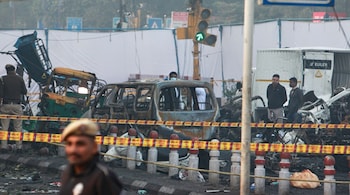
Within seconds of the powerful explosion outside the Red Fort on November 10, Delhi Police launched an aggressive rescue and containment operation that prevented further casualties and cleared the way for an unhindered investigation.
What was initially mistaken for a CNG or cylinder blast was later identified as a suicide bombing-style terror attack allegedly linked to a terror module. As many as 13 people were killed in the explosion.
At 6.52 pm, the official phone of the deputy commissioner of police (North) rang with the first alert: “There’s been an explosion in front of Red Fort…a lot of people are injured…many vehicles damaged.” Officers immediately prioritised evacuation, fire control and securing the scene.
What happened after police was informed?
By 6:52 pm, police personnel from the Red Fort post, normally staffed with 12–13 officers, rushed out. One team began pulling victims out; another started sealing the area.
By 6.53 pm, head constable Than Singh had already lifted an unconscious, heavily injured woman from the road and placed her in an e-rickshaw bound for LNJP Hospital.
“She was middle-aged, around 40 to 45 years… I picked her up and put her into an e-rickshaw and asked the driver to rush her to LNJP hospital,” he recounted, as reported by News18.
A second victim with severe burns was immediately sent off in an autorickshaw. Local rickshaw drivers and market volunteers joined the effort, significantly cutting down response time.
At 6.54 pm, distress messages were flashed to nearby police stations, the Delhi Fire Service and ambulance networks. Officers realised they would need more manpower to deal with both rescue operations and the heavy evening traffic on Netaji Subhash Marg.
By 6.55 pm, the main road had been sealed off, causing jams that were quickly diverted. A human chain and barricades encircled the impact zone as officers secured adjoining routes, including approaches from Chatta Rail Junction, Shanti Van Road and Ansari Road.
At 6.56 pm, a team was sent to Lal Quila Metro station, barely 20 metres from the blast site, to alert CISF personnel and restrict commuter movement.
With fire tenders still en route, officers improvised. At 6.57 pm, they accessed the Metro station’s firefighting system, hauled out hoses and began dousing burning vehicles. E-rickshaw batteries were pulled out and flung away to prevent additional explosions.
At 6.58 pm, another team swept the inner radius for secondary explosive devices. Every vehicle, dustbin, pile of debris and nearby object was inspected as crowds screamed and smoke filled the area.
At 6.59 pm, police activated their public address systems to push back the swelling crowd. Market gates were shut, barricades multiplied and personnel were deployed inside lanes to stop people from approaching the road.
By 7 pm, Delhi Fire Service engines had finally reached, taking over the firefighting and cooling operations. Officers ensured evidence was not tampered with.
At 7.01 pm, senior officers, reinforcements and ambulances reached the site. Most of the severely injured had already been transported in rickshaws, makeshift stretchers, and wooden planks.
At 7.02 pm, barely 10 minutes after the first call, police had secured the first medico-legal certificate from LNJP Hospital. DCP Raja Banthia said these documents would play a key role in determining the nature of the explosive and whether shrapnel or specific chemicals were used.
“This also remains crucial to the investigation… Eventually it may also aid in the finding of what kind of explosive it was and from where it possibly was sourced,” he said.
Discover the latest Business News, Sensex, and Nifty updates. Obtain Personal Finance insights, tax queries, and expert opinions on Moneycontrol or download the Moneycontrol App to stay updated!





