
HomeNewscoronavirusUnvaccinated children in 15-18 age group won't be allowed to enter schools: Haryana govt

Unvaccinated children in 15-18 age group won't be allowed to enter schools: Haryana govt

Schools in the state are currently shut in view of big surge in coronavirus cases in the past fortnight.

January 14, 2022 / 22:47 IST
Story continues below Advertisement
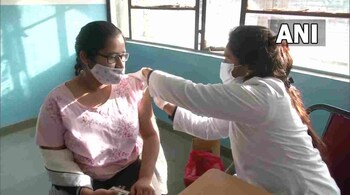
COVID-19 vaccination drive begins for children in the age group of 15 to 18 years at Government Model Senior Secondary School in Manimajra, Chandigarh. (Image: ANI)

Children in the age group of 15-18 years who are not vaccinated against Covid will not be allowed to enter schools, when they reopen, Haryana Health Minister Anil Vij said on Friday. Schools in the state are currently shut in view of big surge in coronavirus cases in the past fortnight.

The minister issued the instruction during a meeting with officials to review the current Covid situation in the state. "During the meeting, the health minister urged all the parents of children between 15 to 18 years of age to get their wards vaccinated at the earliest, as when the schools open, those who have not been vaccinated will not be allowed to enter the school," an official statement said.

Story continues below Advertisement

ALSO READ: Rising trend of Covid cases continues in Haryana with 7,591 fresh infections, 2 fatalities

Over 15 lakh children in Haryana between 15-18 years of age are eligible to get Covid vaccine and vaccination for this age group started on January 3. With the state witnessing big surges in Covid cases, Vij said two nodal officers will be appointed for each district, out of which one officer will monitor arrangements at the government hospitals and the other in private ones.

COVID-19 Vaccine
Frequently Asked Questions

View more

How does a vaccine work?

A vaccine works by mimicking a natural infection. A vaccine not only induces immune response to protect people from any future COVID-19 infection, but also helps quickly build herd immunity to put an end to the pandemic. Herd immunity occurs when a sufficient percentage of a population becomes immune to a disease, making the spread of disease from person to person unlikely. The good news is that SARS-CoV-2 virus has been fairly stable, which increases the viability of a vaccine.

How many types of vaccines are there?

There are broadly four types of vaccine — one, a vaccine based on the whole virus (this could be either inactivated, or an attenuated [weakened] virus vaccine); two, a non-replicating viral vector vaccine that uses a benign virus as vector that carries the antigen of SARS-CoV; three, nucleic-acid vaccines that have genetic material like DNA and RNA of antigens like spike protein given to a person, helping human cells decode genetic material and produce the vaccine; and four, protein subunit vaccine wherein the recombinant proteins of SARS-COV-2 along with an adjuvant (booster) is given as a vaccine.

What does it take to develop a vaccine of this kind?

Vaccine development is a long, complex process. Unlike drugs that are given to people with a diseased, vaccines are given to healthy people and also vulnerable sections such as children, pregnant women and the elderly. So rigorous tests are compulsory. History says that the fastest time it took to develop a vaccine is five years, but it usually takes double or sometimes triple that time.
View more
+ Show



