

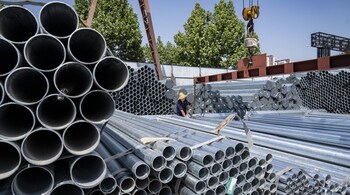
The investment in process and digital technologies across the Indian steel value chain is projected to increase from $1-1.2 billion in 2024 to $2.3-2.7 billion by 2030, excluding ERP (enterprise resource planning) upgrades, according to a report by consulting firm Deloitte, in collaboration with the Federation of Indian Chambers of Commerce & Industry.
This investment will advance technological capabilities and drive significant progress towards a more efficient and sustainable mining and steel industry, the report added. As of now, the Indian steel industry faces export challenges as Europe tightens the climate laws, amplifying urgency for low-carbon technology adoption. The pressure to reduce carbon emissions aligns with India's broader goals under its National Steel Policy, which aims to increase production while minimising environmental impact.
The Deloitte analysis states that large integrated steel players display a high level of technology adoption, mid to small sized steel producers show a moderate level of technology integration, and smaller producers and mini-mills show low adoption level.
The report states that some leading steel and mining organisations have started using digital tools like process yield optimisation, digital twins for autonomous operations, intelligent surveillance, supply chain optimisation, energy efficiency improvements, and AR/VR-based safety training to gain deeper insights and make better decisions, but others are still in the initial stages of their digital transformation journey.
India's finished steel consumption stood at 136.3 million tonnes in FY24, up from 100.2 million tonnes in FY20, driven by infrastructure and automotive demand and supported by government investments. "Current sector trends make it imperative for steel players to focus on asset sweating and cost and operations control," the report added.
While the domestic demand is thriving, the industry faces dumping issues especially from Chinese players, impacting their pricing power. During Q1FY25, the country saw an increased supply of steel driven by a preference for cheaper imported alternatives and need-based procurement, putting domestic steel prices under pressure.
But the report noted that steel manufacturers can navigate industry shifts more effectively through technological advancements and "optimise resource utilisation and position themselves for long-term success in a competitive global market".
Going forward, new entrants in the steel and mining sector will be adopting proven technologies and established players will be scaling and innovating. Future advancements in process technologies will be driven by monitoring of emissions reduction and carbon management demands, shaped by global regulations and India’s net-zero commitments, according to the report.
“The Indian mining and steel sector is on a transformative path, spurred by innovations in AI and digital technologies. On the ground, operators face practical challenges like integrating new systems with legacy infrastructures and managing the costs associated with technological upgrades. To navigate these hurdles, targeted initiatives such as focused training programs for frontline workers and strategic partnerships for technology integration are essential," said Rajib Maitra, partner at Deloitte India.
Discover the latest Business News, Sensex, and Nifty updates. Obtain Personal Finance insights, tax queries, and expert opinions on Moneycontrol or download the Moneycontrol App to stay updated!





