

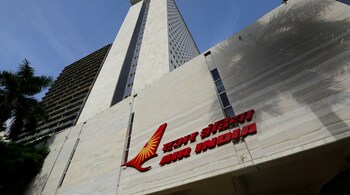
An Air India investigation into why one of its Airbus planes conducted eight commercial flights without an airworthiness permit found ”systemic failures”, a company document showed, putting the lives of hundreds of passengers at risk.
An Airbus A320 flew passengers between New Delhi, Bengaluru, Mumbai and Hyderabad on November 24 to 25 without the mandatory Airworthiness Review Certificate, or ARC, a key permit issued annually by the regulator after a plane passes safety and compliance checks.
Air India found engineers and pilots had failed to check the aircraft’s documents and that changes were needed to bolster compliance protocols.
”Critical information was not shared with all relevant stakeholders, and opportunities for timely intervention were missed,” said the internal investigation report, which was reviewed by Reuters.
”The incident highlights the need for urgent improvements in process discipline, communication, and compliance culture,” added the report, which was dated December 6.
The findings, with a cover letter signed by Chief Operations Officer Captain Basil Kwauk, have been submitted to Indian aviation authorities, but have not been made public.
The report is a stark admission from an airline that suffered its worst disaster when a Boeing Dreamliner crashed moments after take-off in June killing 260 people. Air India has also received warnings for running planes without checking emergency equipment, not changing engine parts on time and forging records to show compliance, as well as other audit lapses.
Air India last week called the Airbus November incident ”regrettable” and said that some people had been suspended, while India’s civil aviation watchdog DGCA ordered the aircraft to be grounded and called for an investigation.
Air India, which is owned by India’s Tata Group and Singapore Airlines, said in a statement to Reuters it had proactively reported the incident to the DGCA and had ”implemented immediate measures to prevent similar instances”, adding it would continue to strengthen its compliance systems.
The DGCA and Airbus did not respond to Reuters requests for comment.
PILOTS WARNED TO BE CAREFUL
An ARC violation can attract a penalty of up to 10 million rupees ($111,201).
The certificate is issued annually for commercial aircraft after a comprehensive review and verification of their compliance with airworthiness standards, according to the DGCA.
It is typically issued after DGCA officials conduct a physical inspection, which includes interior and exterior checks ranging from medical kits on board to tyre condition.
Air India’s investigation found that aircraft VT-TQN flew eight passenger flights and one test flight with an expired ARC due to the ”convergence of multiple latent organizational and process deficiencies.”
It found both the plane’s engines were changed and it was released for the test flight on November 24 without the required special flight permit, because the aircraft maintenance engineer ”failed to check the onboard documents”.
Further checks on passenger flights were also missed, added the report, which was drafted after interviewing employees and reviewing internal evidence.
The Air India investigation also blamed the pilots, saying those who flew the eight flights did not comply with standard operating procedures before taking off.
On December 1, Air India’s Director Flight Operations, Manish Uppal, reminded all pilots via an internal email to check paperwork before every flight, including navigation charts, cargo manifest and the ARC, the report said.
”Non-adherence to company policy or SOPs will be viewed seriously and may attract action,” the email said.
Discover the latest Business News, Sensex, and Nifty updates. Obtain Personal Finance insights, tax queries, and expert opinions on Moneycontrol or download the Moneycontrol App to stay updated!





