

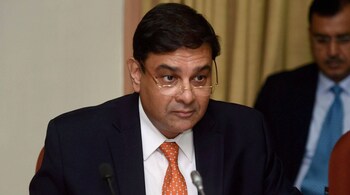
Former Reserve Bank of India (RBI) governor, Urjit Patel, has launched a scathing attack on the RBI and the UPA government for ignoring loose lending practices in the industry prior to 2014 and regulatory oversight, resulting in high non-performing assets (NPAs) in the banking system in the following years.
Patel, who was the governor between 2016 and 2018 has raised three critical points in an article published in Hindustan Times.
One, the RBI failed to effectively monitor and control the NPA build-up in the banking system leading up to 2014. “It failed to challenge assumptions through, for example, more rigorous stress-test scenarios at the bank level, as well as sensitivity analysis on (demand) assumptions, and sector (policy) risks. The scale of exposure – or risk build-up – was not appreciated enough and contested by the regulator to effectively slow down or tighten the lending norms, say, by increasing sector risk weights to ensure protection by increasing capital requirements,” Patel said.
Two, the UPA government didn’t question risk controls in government banks even as it received significant dividends. “A number of government banks did not have senior management in place, and governance suffered. This is a perennial shortcoming on account of bureaucratic inertia and political meddling. Ditto for the banks’ board of directors; it is common knowledge that this has traditionally been a placeholder for sinecure to political supporters,” Patel said.
Three, banks did not follow the necessary due diligence while lending to companies. Often, the golden rules of lending were ignored. “The banks themselves applied little risk analysis in sifting good from bad assets; they kept lending without much (or the requisite) due diligence, scepticism, concern for exposure concentration, high leverage and, overall, dynamic assessment over the cycle (in other words, closed-loop control was abjured),” Patel said.
To be sure, Patel isn’t saying anything new. Reasons for India’s NPA crisis are well known. However, this is probably the first time a former RB governor has attacked the central bank criticising the inefficiency and laxity to monitor the build-up of bad loans in the system. Patel said: “There was a failure to acknowledge and rectify government banks’ inability to identify poor performing assets; and restructure and react quickly to improve recovery or cut losses (by way of illustration, iron and steel companies, airlines, generators, real estate, etc). The regulator’s inspection reports rarely cautioned banks to the extent required about the high credit growth, which was running well ahead of real growth.”
These comments are significant particularly in the present context when the banking system is staring at the second wave of NPAs. It was only in 2014-15 that the RBI started to focus on early identification of stressed assets and initiated steps for Asset Quality Review (AQR). There has been criticism that the RBI acted too late in identifying the stress in the banking system and put in place a strict monitoring mechanism. Bank NPAs shot up to over Rs 9 lakh crore from Rs 3 lakh crore in less than four years. High NPAs also led to significant loan write-offs and high provisioning burden on banks. Under RBI norms, banks need to set aside money to cover likely losses from bad loans, called provisions. Between 2001 and 2019, public sector banks alone have written off Rs 7 lakh crore worth loans, according to data from the All India Bank Employees Association, the biggest body of bank employees in the country.
Even now, banks are fighting the ghost of bad loans from the past. The scenario is likely to worsen going ahead in the backdrop of Covid-19. According to Global rating agency Fitch, bank NPAs are likely to spike significantly post the moratorium period to around 14 percent of the total loans. Former RBI governor, Raghuram Rajan too had warned that there will be an ‘unprecedented’ spike in NPAs in the next six months. In this context, it is critical to learn from the mistakes from the past and tighten the credit appraisal processes to avoid further NPA shocks. Patel’s warnings are timely.
Discover the latest Business News, Sensex, and Nifty updates. Obtain Personal Finance insights, tax queries, and expert opinions on Moneycontrol or download the Moneycontrol App to stay updated!





