

The past few days have seen a flurry of activity in the aviation sector. Within hours of the announcement that international services would open up from mid-December, reports of a new variant of the COVID-19 virus led to a rethink and eventual extension of the suspension.
The regulator was quick to extend the suspension until end of January. This was supplemented with guidelines from various ministries, implementation of rules like random testing at airports, mandatory arrival tests for passengers arriving from “high risk” countries, and more.
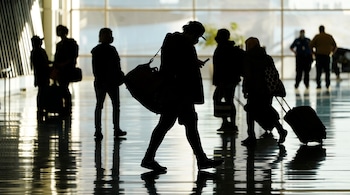
This resultant bottlenecks led to an outpouring of pictures on social media showing the massive congestion at immigration, customs and other choke points at airports, primarily at Delhi and Mumbai, the two gateways for international flights in India.
International — the new challenge
The count of international flights has dropped significantly. Data released by the aviation ministry on a daily basis shows that average departures and arrivals of international flights are between 275 and 300 on any given day with about 50,000 arriving or departing passengers daily. This is a fraction of the pre-COVID numbers, mainly due to the curbs on international travel with only Air bubble flights being allowed in addition to flights operated under the Vande Bharat Mission.
But even with limited flights, there has been much noise about the experience on arrival as well as long lines to get into the terminal for departing passengers.
What led to this?
The real question everyone has is, how is it leading to crowding at each touch-point when the passenger numbers are a fraction of pre-pandemic levels? Indian airports have been running out of space even pre-pandemic but that was seasonal when flights were full unlike a daily affair now.
The new arrival process like testing, segregation, temperature checks and more did not exist in the pre-pandemic era. This means the infrastructure simply isn't designed to handle the new requirements. All of this comes with caution like distancing and at a time when due to limited flights they are full, unlike in the past when not all flights were full due to the choice available to passengers.
Domestic — the perennial one
While international arrivals and departures got all the coverage in the last few days, a steady issue with congestion at the domestic side was also visible. What is interesting is that passenger numbers have not yet reached those seen before the pandemic, with the highest being recorded on November 21, when at 3,93,245 passengers, traffic was 92.49 percent of pre-pandemic levels.
The flights deployed haven’t breached the 90 percent mark yet with the most number of flights in the country being on December 9, which stood at 88.6 percent of the approved winter schedule (2,821 flights).
Delhi, the largest airport in the country, which used to handle around 7.7 lakh passengers daily pre-COVID, now caters to 6-6.5 lakh passengers a day. This is distributed across three terminals, one of which is undergoing expansion and operating at a lower capacity with a host of infrastructural challenges.
The pandemic has led to a shift in traffic patterns and preferred timings. While earlier there was a good amount of traffic for early morning, late evening and red-eye flights, the pandemic-induced restrictions that continue to be in place at a few destinations in the country coupled with a tailing off lack of business travellers (who preferred to return to base even if it is late) has meant that there is a bunching of flights.
Simply put, the same number of flights that were spread across 24 hours of the day are now primarily in the morning hours without as much distribution across the rest of the day.
Quick fix?
Much of the complaints at major airports are coming from bottlenecks at immigration and customs. While the airports are being blamed for this, the fact is that both immigration and customs are part of the government service and the airport only provides infrastructure to these teams and helps with managing the queue, at best.
The government could look at the flight schedule for international flights to increase staff for both immigration and customs to ensure a speedier exit. More often than not, customs teams want passengers to have their luggage scanned before exiting the airport, leading to long lines. The limited X-ray machines create a logjam in such cases, further adding to delays.
For both domestic and international travel, the airports hand out slots to airlines based on runway capacity and gate capacity. When either of them is not available, slots are pushed in either direction. With the “new normal” the airports also need to be in sync with testing capacity, immigration capacity and customs capacity to ensure there is proper spacing for international flights and, likewise, map the security capacity on the domestic side. While this might lead to an exhaustive change in flight timings for airlines, it could well turn out to be good for passengers, airlines and airports.
Discover the latest Business News, Sensex, and Nifty updates. Obtain Personal Finance insights, tax queries, and expert opinions on Moneycontrol or download the Moneycontrol App to stay updated!





