

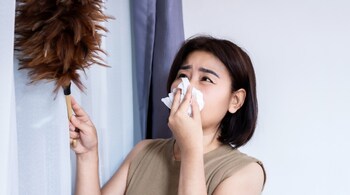
With so much dust everywhere, waking up every morning with a persistent sneeze, itchy eyes, or even difficulty breathing, is a normal thing with many. However, do not ignore these signs as they are the symptoms that could signal an underlying dust mite allergy, a condition triggered by tiny allergens lurking in your homes, or vehicles.
Dust mite allergy, also known as house dust allergy, stems from allergens present in household dust, particularly from dust mite droppings. Dust mite allergens are strongly associated with conditions like allergic rhinoconjunctivitis, asthma, and atopic eczema. Treatment approaches typically involve minimising allergen exposure, pharmacotherapy (such as antihistamines and corticosteroids), and allergen immunotherapy (AIT).
Dust mites thrive in warm, humid environments and sustain themselves by feeding on shed human and pet skin cells, commonly inhabiting bedding, carpets, and upholstered furniture.
Here are some effective strategies to prevent and combat dust mite allergy:
Keep your bedding and lenins clean: Wash bedding, pillowcases, and blankets weekly in hot water to kill dust mites and remove allergens effectively.
Use dust mite proof covers: Encase mattresses, pillows, and box springs in allergen-proof covers to create a barrier against dust mites and their allergens.
Vaccum regularly: Vacuum carpets, rugs, and upholstered furniture weekly using a vacuum cleaner equipped with a HEPA filter to trap allergens and prevent their circulation.
Control indoor humidity: Keep indoor humidity levels below 50 percent to inhibit dust mite growth. Use dehumidifiers in damp areas like basements and bathrooms.
Avoid clutter: Reduce dust accumulation by decluttering and minimising items that collect dust, such as knick-knacks and books.
Use air filters: Install HEPA filters in central heating and cooling systems to capture airborne allergens like dust mites and pollen.
Choose allergen reducing flooring: Opt for hardwood, tile, or linoleum flooring instead of carpets where possible, as carpets can harbor dust mites and allergens.
Keep your car clean: Just like you clean your home everyday, clean the car interiors, including carpets, upholstery, and floor mats, regularly, to remove dust mites and allergens that may accumulate.
Use allergy-proof car accessories: Opt for allergen-proof car seat covers and steering wheel covers to minimise exposure to dust mites and allergens while driving.
Do not turn on the AC: Switching on the air conditioner immediately upon entering a car can circulate allergens. Instead, open windows for ventilation initially to reduce dust mite exposure.
Minimise time spent outdoors during high pollen counts: Pollen can exacerbate dust mite allergy symptoms. Check pollen forecasts and try to limit outdoor activities during peak pollen times.
Discover the latest Business News, Sensex, and Nifty updates. Obtain Personal Finance insights, tax queries, and expert opinions on Moneycontrol or download the Moneycontrol App to stay updated!





