

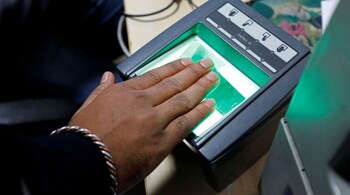
Multiple police investigations conducted in several parts of the country over the past week have reportedly uncovered organised scam networks manipulating Aadhaar data to make bogus claims
Body: Aadhaar, India’s biometric identity system, is repotedly being misused in a growing number of insurance frauds across the country. Several recent reports say that organised scam groups are believed to be altering Aadhaar details, things like a person’s date of birth, name, address, or even their fingerprints and iris scans, to either create fake insurance policies or get fraudulent claims approved.
They are particularly targeting government-backed schemes such as the Pradhan Mantri Jeevan Jyoti Bima Yojana (PMJJBY), because these schemes, reports say, have less complicated sign-up rules compared to private insurance, making it easier for fraudsters to enroll ineligible people or set up false identities.
While a major investigation by the Uttar Pradesh Police last week has brought the issue into focus, similar frauds have surfaced in places such as Noida, Ghaziabad, Kolkata, and Meerut.
Here is a closer look at how the fraud network operated and what this means for policyholders.
How are the frauds being carried out?
The frauds are allegedly being executed through a mix of document forgery, digital manipulation, and coordinated insider involvement. Fraudsters are altering Aadhaar details, particularly the date of birth, to make applicants eligible for insurance schemes that have strict age limits, such as the PMJJBY and Pradhan Mantri Suraksha Bima Yojana (PMSBY). This is often done by accessing Aadhaar update services through colluding operators or, in some reported cases, tampering directly with the UIDAI database. Fake death certificates, forged Aadhaar cards, and falsified hospital records are allegedly the common tools in this operation. These allow scammers to either fabricate the death of a policyholder or extend coverage to someone who would otherwise be ineligible.
Backdating policies is reportedly another tactic, by making it appear that a person was insured before they fell ill or died, fraudsters create a claimable scenario. According to a report by the Times of India, the execution of these scams usually involves multiple players, including insurance agents willing to bypass due diligence, bank employees who process policy-linked payments without proper verification, hospital staff who issue fake medical documents, ASHA workers who identify potential “targets” in villages, and municipal officials who provide forged birth or death records. In rural pockets, these networks operate by sharing information on vulnerable individuals and splitting the insurance payouts. So, why is Aadhaar a “weak link” in these scams?
Aadhaar’s ubiquity with over 1.3 billion Indians possessing it, reportedly makes it the default identity verification tool for banks, insurers, and government schemes. While it streamlines customer onboarding, this universality also seems to make it a prime target for fraud. Once an Aadhaar number is compromised, it can be used to generate forged identity documents, create fake profiles, or even link to bank accounts and policies without the real person’s knowledge. The problem is compounded by the reliance on photocopies or scanned images of Aadhaar for verification in many places, rather than live, real-time checks with UIDAI. This creates an opening for doctored Aadhaar cards to pass undetected. Additionally, the insurance industry often detects fraud only during claims processing, by which point payouts may already be in motion. This delay allows scam networks to operate for months before being caught, and by then, the fraudulent payouts are often unrecoverable.
Who are the typical victims?
According to experts, fraudsters focus on individuals who are less likely to scrutinise or contest fraudulent activity. These include terminally ill patients, whose imminent deaths allow for quick claims, elderly citizens, who may not fully track their financial documentation, and families of deceased persons, whose identities can be used without consent. In rural areas, some victims are entirely unaware that an insurance policy has been issued in their name. Experts added, agents and middlemen may process policies without informing them, using forged signatures or thumb impressions. “This means victims sometimes only discover their involvement in a policy after a claim has been made in their name, by which time the fraudsters have vanished with the payout,” they said.
What is the financial impact?
According to experts, fraudulent claims may account for as much as 15 percent of total insurance claims in India, and this is “a figure that is rising as Aadhaar-related manipulation becomes more common.” While precise numbers are difficult to quantify due to ongoing investigations, he said, the losses are likely to run into hundreds of crores of rupees annually. India’s total annual insurance claims across life, health, and motor segments run into several lakh crore rupees. Industry studies, including those by the Insurance Information Bureau and EY, estimate that 8-15 percent of payouts may be fraudulent. “Even a 1 percent fraud rate would translate into losses worth hundreds of crores. Aadhaar-linked scams make up only a part of this, but their growing prevalence, particularly in health and life policies, including government-backed schemes like PMJJBY suggests the potential losses could run into hundreds of crores each year. These scams do not just impact insurers. The costs are often passed on to genuine policyholders in the form of higher premiums,” they said.
What actions are being taken?
According to reports, law enforcement agencies are actively pursuing these cases, with FIRs filed and suspects arrested in multiple States. In Uttar Pradesh alone, dozens of people have been charged, and cross-district investigations are underway to trace connections between local fraud networks. On the industry side, insurers are working closely with the Insurance Information Bureau of India (IIB) to strengthen fraud detection capabilities. This includes building centralised databases of suspicious claims and high-risk agents. The Ministry of Finance has held direct meetings with insurance companies and senior police officials to address systemic loopholes, particularly those related to “insuring the dead.” ICICI Lombard CFO Gopal Balachandran told Moneycontrol that there is also momentum towards tighter KYC protocols, including making real-time Aadhaar authentication mandatory for high-risk schemes. In some cases, insurers are piloting biometric re-verification before settling large claims.
What does this mean for the policyholder?
For regular customers, experts said, the immediate effect will likely be tighter scrutiny at every stage, whether buying a policy or making a claim. While this could add extra steps, it also increases protection against identity theft and fraudulent claims in your name. Policyholders must mask their Aadhaar number when sharing copies, according to experts, while regularly checking your insurance records to ensure no unauthorised policies have been opened, and being cautious about agents offering “special schemes” or quick payouts. If you suspect misuse, they suggest, report it both to your insurer and to UIDAI, and lodge a police complaint without delay.
Discover the latest Business News, Sensex, and Nifty updates. Obtain Personal Finance insights, tax queries, and expert opinions on Moneycontrol or download the Moneycontrol App to stay updated!





