

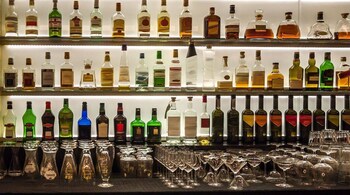
The National Conference-led Jammu and Kashmir government seems to be in a catch-22 situation with the growing the clamour for a total ban on liquor in the Union territory by political parties and religious leaders in one hand and an increased uptick in revenue from liquor sales. The J&K government's latest economic survey projects a 4% rise in excise revenue, expected to touch Rs 2,000 crore in 2024-25. The increase in revenue is linked to policy reforms such as stronger tracking systems, transparent auctions, and a revamped excise framework.
Why is there a growing clamour for a blanket ban?
The demand for a liquor ban in the Union territory, a Muslim-majority region and a popular tourist destination, is a complex issue that involves balancing religious, cultural, social, and economic considerations. Providing an ideal argument for a liquor ban requires addressing all aspects while also considering the political motivations behind such campaigns.
Political and religious leaders are aligning to the argument that combines religious and cultural alignment, public health benefits, social stability, and the potential for alcohol-free tourism. Politicians align with this sentiment to gain public support, demonstrate leadership, and address the moral and ethical concerns of their constituents. While challenges exist, a well-planned and inclusive approach can make the case for a liquor ban both compelling and feasible.
For them, the call for a liquor ban is rooted in religious principles and the desire to align public policy with these values. However, the issue is not solely religious; it also has socio-economic and political dimensions.
Some argue that the availability of alcohol leads to social problems, such as addiction, public disorder, and health issues. On the other hand, there are unassessed concerns about the economic impact of a liquor ban, as the sale of alcohol generates significant revenue for the government and supports livelihoods in the hospitality and tourism sectors.
A look at the new excise policy
J&k government’s new excise policy, released on 15 February, takes a two-pronged approach. It recognises the "harmful effects of alcohol consumption and drug abuse" but also aims to "provide a choice of liquor brands and places for consumption." The policy promotes industry growth, encourages local manufacturing, and seeks to create jobs. There are plans to open liquor outlets at tourist hotspots, especially in government-owned properties. The policy also prohibits the import of IMFL brands priced at Rs 600 or below per bottle.
Why govt's new bid may complicate the matter
Amid demands of a ban on liquor by political parties and religious leaders, the government has launched bids for opening of new shops at 83 locations in the union territory including in four districts of the Kashmir valley. According to the Excise Policy 2025-26 released by the JK government's finance department, which is headed by chief minister Omar Abdullah, the government has invited bids for opening of more than 200 new shops in the ten districts of Jammu and four districts of the Kashmir valley. The policy will come into force from April 1, this year and will continue to remain in force till 31 March, 2026. Meanwhile, as per the economic survey report, tabled in the assembly, the revenue collection from sale of liquor has increased as the JK government opened dozens of new shops across the UT from the last two years.
Will phased ban be more effective?
Former finance minister Haseeb Drabu, who opposed prohibition in 2016 on personal choice grounds, believes a phased approach is more practical. “One option could be to ban it only in the Valley to start with. That way, revenue would also be protected as the bulk of it comes from Jammu. The flip side of this would be bootlegging, especially in a tourist-driven state,” Drabu said.
Discover the latest Business News, Sensex, and Nifty updates. Obtain Personal Finance insights, tax queries, and expert opinions on Moneycontrol or download the Moneycontrol App to stay updated!





