

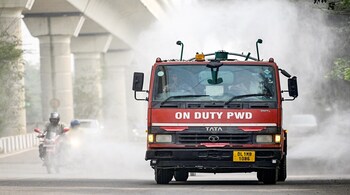
Delhi’s hazardous air quality has propelled lung cancer into a growing public health crisis, according to the latest findings revealed by the Asia Pacific Lung Cancer Policy Consensus (APAC Consensus). Released ahead of World Lung Cancer Day (August 1), the document lays bare the sharp upturn in cases tied to air pollution, a pattern echoed across the region and starkly visible on the streets of the capital.
Experts note that Delhi’s air quality index often outstrips safe limits by as much as eight to ten times, creating an environment where lung cancer rates are increasingly driven by factors far removed from traditional smoking risks. As reported by TOI, India in 2020 saw 5.9% of the world’s cancer cases and 8.1% of deaths, with lung cancer comprising a significant share, a trend that Delhi is quickly mirroring.
Data from the Delhi Cancer Registry indicate a worrisome rise in the proportion of cancers attributed to the lungs: amongst men, rates grew from 8.4% in 1988 to 10.6% in 2015. Women, too, have seen incidence nearly double in the same period, climbing from 1.9% to 3.4%.
The upward tick is not limited to historic smokers. Analysis by surgeons at Sir Ganga Ram Hospital and the Lung Care Foundation reveals a striking shift: where 90% of lung cancer surgery patients in 1988 were smokers, by 2018 that figure had plummeted to just 50%. Younger patients are bearing the brunt - of those under the age of 50 who required surgery for lung cancer, 70% were non-smokers and none in the under-30 group had smoked. This, as pointed out in the TOI report, signals an alarming trend that can no longer be ignored.
Dr Abhishek Shankar, assistant professor of radiation oncology at AIIMS and India’s representative to the APAC Consensus, was cited by TOI as saying, “The link between air pollution and lung cancer is no longer a suspicion — it’s a reality we’re living with in Delhi.” According to the same report, Shankar explained that the city’s changing lung cancer profile, increasingly dominated by non-smokers and younger individuals, was a symptom of the “toxic air,” adding, “You can’t talk about reducing lung cancer in Delhi without first addressing the air we breathe. This isn’t just an environmental issue, it’s a public health emergency.”
Doctors and researchers highlight multiple factors fuelling the crisis — exposure to second-hand smoke, vehicular and industrial emissions, cooking oil vapours and indoor fuel pollutants are all in the mix, alongside a possible increase in oncogenic mutations like EGFR, especially common in Asian patients.
The APAC Consensus, a regionally led initiative developed by ASPIRE for Lung Cancer and Asia Pacific Coalition for Lung Cancer, calls for redefining lung cancer risk to include non-smoker factors, strengthening environmental regulations, boosting early screening programmes, fighting stigma around non-smoking patients, and ensuring fair access to treatment. As Delhi readies for yet another bout of hazardous air in the coming season, experts are firm: the link between toxic air and cancer is “impossible to ignore”.
Discover the latest Business News, Sensex, and Nifty updates. Obtain Personal Finance insights, tax queries, and expert opinions on Moneycontrol or download the Moneycontrol App to stay updated!





