

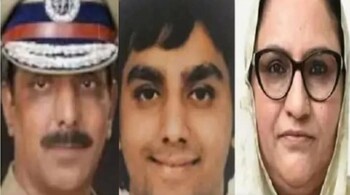
The Haryana Police’s decision to book former Punjab director general of police Mohammad Mustafa and his wife, ex-minister Razia Sultana, for the murder of their son has been met with a forceful rebuttal from the retired IPS officer, who claims the tragedy stems from his son’s 18-year battle with severe drug addiction and mental illness.
Mustafa, a four-time winner of the President’s Police Medal for gallantry, was cited by The Indian Express as saying that his 35-year-old son, Aqil Akhtar, was found dead at his Panchkula residence on October 16. He cited an initial police probe indicating the advocate died after “injecting buprenorphine in overdose.”
The case was escalated after an FIR was registered on October 20 based on a complaint from Shamshudin Chaudhary, who alleged foul play and cited a video made by Akhtar before his death. In the disturbing footage, the deceased alleged his family might frame him or have him killed, claiming they were establishing a “false narrative” by telling him he was delusional.
However, Mustafa presented a starkly different account, painting a picture of a family worn down by nearly two decades of addiction-related crises. He stated his son’s problems began while he was a Class 10 student at Welham Boys School in Dehradun and led to his expulsion from multiple schools in Chandigarh.
“For 18 years since 2007, we were getting him treated for addiction, including at PGIMER Chandigarh but he would relapse,” Mustafa said in his account to The Indian Express. “He turned ‘psychotic’ and developed severe mental illness. Due to psychosis, he had started imagining things.”
The retired IPS officer detailed a harrowing domestic situation, alleging his son “harassed his wife and mother for money for drugs and had even set our house on fire once.” The family’s attempts to manage the crisis were extensive, he suggested, but ultimately futile.
Mustafa reportedly revealed the family's internal conflict, stating that they had filed multiple police complaints against their son in Panchkula, but would consistently retract them because he was their blood. He described his son's addiction as having evolved from psychotropic drugs to softer drugs, with a recent relapse involving the drug 'ICE' obtained from local peddlers.
Addressing the incriminating video, Mustafa attributed its content to his son's unstable mental state. He claimed that Akhtar would often not remember when he had recorded a particular video and would retract his statements hours later. This claim appears to be supported by a second video in which Akhtar himself retracted his earlier allegations, blaming them on his mental illness.
The former DGP also defended his daughter-in-law, who has also been named in the FIR, stating those raising a finger at her “have no idea what all she has been through.” He said the family had rented a separate house for Akhtar, his wife and their two children to shield them, revealing that his grandson had sunk into depression “seeing how his mother was tortured by my son.”
A Special Investigation Team (SIT) has been formed to probe the case. Deputy Commissioner of Police Srishti Gupta confirmed the FIR was registered after videos surfaced “alleging personal disputes and apprehensions about threats to his life.” The police have sent viscera samples for forensic analysis, but the report is expected to take months.
Discover the latest Business News, Sensex, and Nifty updates. Obtain Personal Finance insights, tax queries, and expert opinions on Moneycontrol or download the Moneycontrol App to stay updated!





