

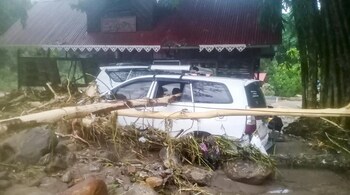
The Queen of Hills is reeling once more. A concentrated, violent downpour on the night of October 3 battered Darjeeling, claiming lives and severing crucial links like the Dudhia bridge. This disaster, however, is not a singular event but part of a grim and predictable pattern, one exacerbated by human activity and institutional failure.
Darjeeling's long history of landslides
Darjeeling's beauty has long been shadowed by natural calamity. As reported by The Indian Express, records show massive landslides struck the region in 1899, 1934, 1968 and repeatedly in subsequent decades. The 1968 floods, also in October, killed over a thousand people.
The force of these events is etched in memory. Leila Seth, former Chief Justice of Himachal Pradesh, vividly described the 1950 landslides in her memoir. She wrote of hearing "an enormous, ear bursting, crumbling sound" and watching her home in the Railway Estate cave in "like a house of cards."
What has changed in Darjeeling?
While the hills have always been prone to instability, the context has transformed dramatically. The Indian Express outlines five key shifts that have turned natural hazards into human catastrophes.
First, a population boom and a "land-and-property-buying spree" over the last thirty years have increased pressure on the fragile landscape.
Second, climate change has altered rainfall patterns. The traditional, steady monsoon showers, known as 'sawnaay jhari', have been replaced by intense, short bursts of 'mushaldhare varsha', which the ground cannot absorb.
Third, rivers and streams are changing course unpredictably, invading human settlements.
Fourth, heavy and often unsuitable development projects, from hydroelectric plants to hotels, have assaulted the hills' limited carrying capacity.
Finally, the unchecked construction of settlements on riverbeds and along streams has caused "arterial clogging," disrupting natural water flow.
Was this tragedy predicted?
The short answer is yes. Multiple studies and institutions have consistently sounded the alarm.
The Landslide Atlas of India 2023, published by ISRO, ranks Darjeeling 35th among the country's most landslide-exposed districts. Local NGOs, such as Save the Hills, have tirelessly highlighted these threats on social media and through public campaigns.
The recent Glacial Lake Outburst Flood (GLOF) in Sikkim serves as a chilling precedent. As noted in the Sikkim Human Development Report back in 2001, the breach of Lhonak lake was a known risk. The 2023 event wiped out a major hydro project and caused estimated damages of nearly 60% of Sikkim's GDP, with downstream effects felt in Darjeeling.
What action is needed?
The response has been critically lacking. According to The Indian Express report, there is a severe absence of urgency from central and state governments in both forewarning communities and managing disasters.
Local bodies like the Gorkhaland Territorial Administration lack the funds, skills and technology to respond effectively. Even hill municipalities, once models of governance, now lack basic solid waste management, which itself contributes to disasters.
The institutional failure is starkly visible in the Teesta Bazar area, where floodwaters from the GLOF continue to block highways weekly, with damage remaining unattended.
Why are the stakes so high?
The ramifications extend far beyond local tragedy. Darjeeling's geopolitical location at India's strategic "chicken's neck" corridor gives these disasters a national security dimension.
The region's famed tea, tourism and education — historically key contributors to India's global presence — are being doubly eroded by climate change. There is a pressing need for national institutions dedicated to climate and disaster management for the entire Eastern Himalayas.
A longstanding plea to convert the historic Forest Rangers College in Kurseong into a climate change centre for the region reportedly remains unaddressed by the Ministry of Environment in Delhi.
As one expert argues, given its sensitive location, Darjeeling's development status must now be viewed exclusively through the lens of national security and interest.
Discover the latest Business News, Sensex, and Nifty updates. Obtain Personal Finance insights, tax queries, and expert opinions on Moneycontrol or download the Moneycontrol App to stay updated!





