

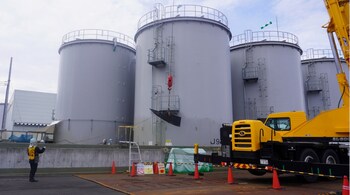
More than a decade after the 2011 Fukushima disaster upended Japan’s nuclear ambitions, the country is officially preparing to restart development on a long-stalled reactor project. Kansai Electric Power, one of Japan’s largest utility companies, announced on July 22 that it will work with the government to begin a feasibility survey for a new nuclear reactor at the Mihama site in Fukui Prefecture.
This marks the first concrete move toward building a new nuclear facility since the catastrophic triple meltdown at the Fukushima Daiichi plant following the devastating earthquake and tsunami. The announcement follows a key policy revision by the Japanese government earlier this year aimed at boosting the country’s nuclear output.
In February 2025, Japan unveiled a new nuclear energy strategy targeting 20% of the country’s electricity generation to come from nuclear power by 2040. The revised framework supports not only the reactivation of dormant reactors but also the construction of next-generation facilities, like the proposed Mihama plant.
Fukui Prefecture, on the Sea of Japan coast, already hosts multiple nuclear facilities and has historically been at the centre of Japan’s atomic energy program. The latest plan would deepen the region’s nuclear footprint while raising fresh debates about safety, public consent, and long-term energy security.
Kansai Electric’s President Nozomu Mori emphasized the importance of nuclear power for Japan’s broader energy strategy. “In a resource-poor country like Japan, we need to think about how to ensure uninterrupted energy supplies, especially with the growth of new industries,” Mori said, as quoted by the Financial Times.
Currently, Japan relies heavily on imported fossil fuels. Before the Fukushima disaster, the country operated 54 nuclear reactors. But in the aftermath, widespread public opposition and safety concerns led to mass shutdowns. Today, only a little over a dozen reactors are operational, contributing approximately 12 gigawatts of power—far below pre-2011 levels.
The planned feasibility study at Mihama will assess geological and topographical conditions and other crucial site-specific factors needed to determine the project's viability.
Japan’s Economy, Trade and Industry Minister Yoji Muto, speaking on Tuesday, justified the move as a vital step toward reducing carbon emissions and securing reliable energy sources. “With a significant loss of nuclear power supply expected, it is necessary to rebuild with next-generation reactors, based on the premise of ensuring safety and gaining local understanding, to secure decarbonised power sources,” Muto said.
Kansai Electric and government officials argue that reviving nuclear power is not just about energy production, but also about economic resilience and climate responsibility. As global energy markets remain volatile and Japan strives to meet its carbon neutrality goals, nuclear energy may once again become a central pillar of its long-term strategy.
Discover the latest Business News, Sensex, and Nifty updates. Obtain Personal Finance insights, tax queries, and expert opinions on Moneycontrol or download the Moneycontrol App to stay updated!





