In pics | Coronavirus changes how we buy food - From deliveries in Arizona to fish markets in California
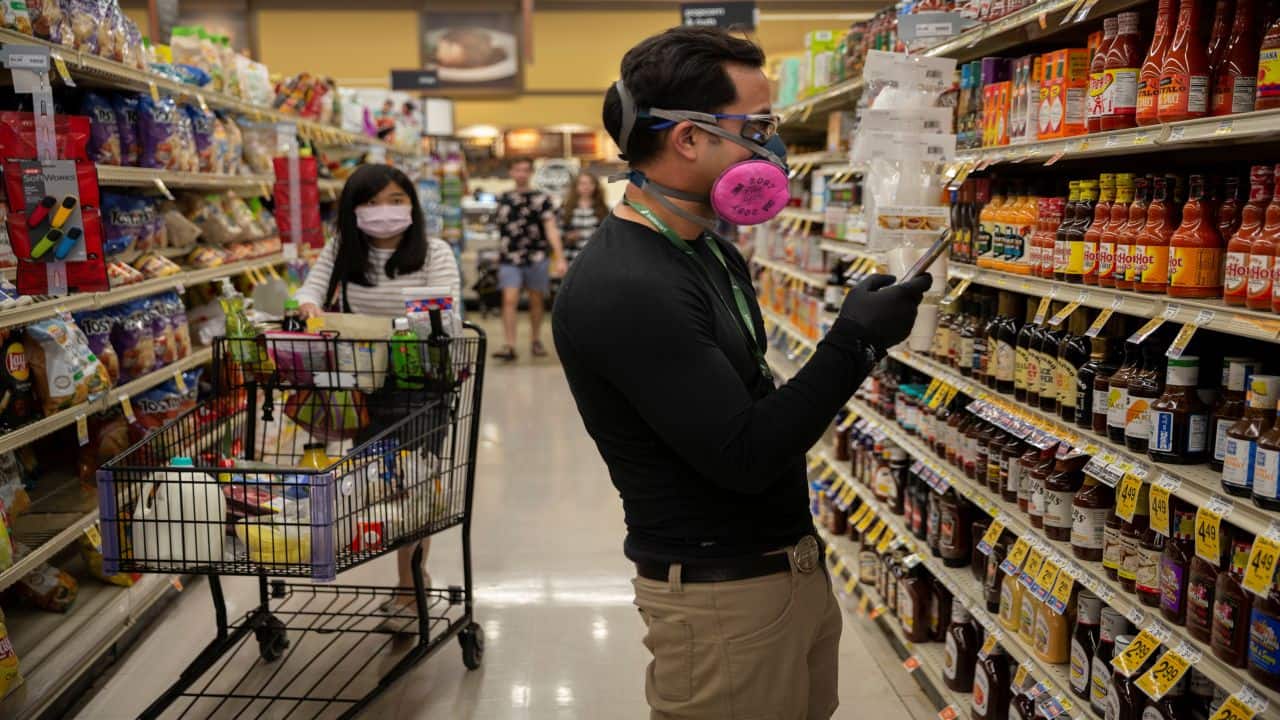
Eric Cohn used to wear a respirator mask, goggles and gloves only to protect against mold and asbestos as he restored homes in Tucson, Arizona. Now he dons the same gear in his new job - shopping for quarantined customers.
Instacart employee Eric Cohn used to wear a respirator mask, goggles and gloves only to protect against mold and asbestos as he restored homes in Tucson, Arizona.(Reuters)
2/20
Now, Eric Cohn dons the same gear in his new job - shopping for quarantined customers. (Reuters)
3/20
Sydney Iacino and Tiffany Haworth sell sustainably-caught fish at the Pacific Horizon tent at Tuna Harbor Dockside Market in San Diego, California. (Reuters)
4/20
Corinne Henslee and her sister Ellen prepare orders at Front 9 Farm where they have started offering weekly deliveries of vegetables, meats, cheeses and other fresh items following the coronavirus disease (COVID-19) outbreak, in Lodi, Ohio, US (Reuters)
With over 90% of the U.S. population under orders to stay home to slow the spread of the coronavirus, Cohn is among a new class of front-line workers delivering food to people’s houses.(Reuters)
6/20
Commercial fisherman Ben Stephens pushes a cooler filled with fish packaged for delivery at Tuna Harbor in San Diego, California. (Reuters)
7/20
Tim Kelly and Jimmy Myers run one of four pickup spots in Madison Park, Lakewood for Front 9 Farm where they have started offering weekly deliveries of vegetables, meats, cheeses and other fresh items following the coronavirus disease (COVID-19) outbreak, in Ohio, US (Reuters)
Bluefin tuna steaks are seen onboard a commercial fishing vessel in Tuna Harbor in San Diego, California, US. (Reuters)
9/20
Instacart employee Eric Cohn said he often feels vulnerable in the supermarket checkout line as other customers get closer to him than the recommended 6 feet (1.8 meters). (Reuters)
10/20
Eric Cohn, once safely back in his car, he disinfects his gloved hands, steering wheel, door handles and phone. He often works 14 hours with a goal of making $200 a day. (Reuters)
11/20
Eric Cohn sprays his phone with disinfectant. (Reuters)
12/20
Concerns about staff safety led a family in New York’s Brooklyn neighborhood to decide to close their three restaurants. (Reuters)
13/20
Commercial fisherman Ben Stephens cuts an opah fish onboard the Gutsy Lady 4, a fishing vessel, docked in Tuna Harbor in San Diego, California, US (Reuters)
14/20
With restaurants closing and so many people ordering food from their homes, many Americans have found delivery slots at grocery stores evaporating. (Reuters)
15/20
Commercial fisherman Ben Stephens sells fish directly to a customer out of the back of his truck in Coronado, California, US. (Reuters)
16/20
Instacart employee Eric Cohn, 34, heads to his car outside a Safeway grocery store. (Reuters)
17/20
Chef Jeorge Cardenas shares an elbow bump with regular Ix customer Lorenzo Bernasconi. (Reuters)
18/20
Concerns about staff safety led a family in New York’s Brooklyn neighborhood to decide to close their three restaurants.(Reuters)
19/20
Eric Cohn loads an order into his car outside a Fry's grocery store. (Reuters)
20/20
JorgeCardenas makes call to let friends and parties related to the business know the restaurant will be closing. (Reuters)