

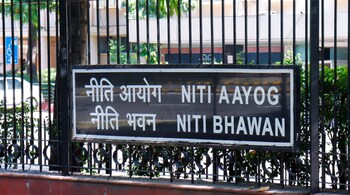
Since 2014, empowering states and encouraging competitive federalism has been one of the policy hallmarks of the Union government. The NITI Aayog has periodically compared the states on multiple fronts — from innovation to public health to school education quality. This has helped the states learn from one another, and adopt the best practices which has led to better outcomes. Yet, competitive federalism is not encouraged in the most important social development programme in India — reservations.
Competitive Federalism In Reservation
Competitive federalism works for those policies where the states have considerable leeway. In the reservation programme, the states do have huge scope to modify the programme as they see fit — from deciding which socio-economic groups deserve reservation, to building educational capacity, to the percentage of seats that can be reserved, and others. This empowerment has caused widespread variation between the states in implementing reservations.
For instance, the Scheduled Caste, the Scheduled Tribe, and the Other Backward Classes (OBCs) lists are specified as per the directives of each state. Consequently, the percentage of the population eligible for reservations differs dramatically — from 97 percent in Tamil Nadu to 39 percent in West Bengal. Higher the percentage of population eligible for reservations, the higher is the competition for a given number of seats. This directly impacts the ability of the most vulnerable communities to take advantage of reservations.
In addition, each state has formed different rules to run the programme. For instance, under The Right of Children to Free and Compulsory Education Act 2009 (Right to Education Act), the states can decide the allocation for the RTE reserved seats in non-minority private schools.
In Odisha, 40 percent of the reserved school seats are allocated jointly to the SCs, the STs, and the socially and educationally backward classes (SEBCs). However, in Telangana, the SCs are exclusively allocated 40 percent of the RTE reserved seats, and 16 percent are exclusively for the STs. Similarly, Telangana explicitly includes religious minorities in the RTE reserved seats, while Odisha doesn’t.
Further, the total educational capacity in each state varies, impacting its ability to meaningfully contribute to the uplift of reserved population groups.
Thus, there are huge state-level variations in reservations, and its impact. Hence, the NITI Aayog can play a crucial role in comparing the state outcomes through a standardised framework. This would help identify the better performers, the best practices, and drive reform at a large scale in this critical social development programme.
What role can data play?
Comparing the states would require measuring outcomes, i.e., the socio-economic progress of each group. The role of reservations is to provide equity to under-represented communities, and, hence, the equitable distributions of reservations at the caste level is an important outcome that needs to be tracked. Measuring equity entails knowing each caste’s population and mapping the reservation benefits provided to each caste.
One route to building datasets on caste-group populations is by digitising the caste certificates, and linking them to Aadhaar. With a similar objective of understanding caste-wise population sizes, some political parties have recently demanded a caste-based census.
A digitised caste certificate database would be vastly better, as it is a verified government document used across government programmes. It would also be dynamic, reflecting year-on-year changes. Some states such as West Bengal and Maharashtra, have already started initiatives to digitalise caste certificates. Linking Aadhaar to caste certificates would help track beneficiaries, and decode the accrual of reservations benefit to each caste, and provide data on equitable distribution of reservation benefits.
Some studies indicate that India may have a problem of lopsided distribution of benefits, with a huge number of castes having received zero reservation benefits. The NITI Aayog can play a crucial role in understanding the impact of reservations at a caste level, and identify the most vulnerable castes through a metric-driven process.
For instance, some metrics that can be tracked for each caste are the number of graduates per capita in each caste, the number of doctors per capita, the number of civil servants or equivalent high social status professions per capita, and so forth. These dynamic metrics can not only help identify the deprived communities, but can also help track their year-on-year progress. Interventions for those most-in-need can be designed on the lines of the aspirational districts programme,
The reservation programme has immense scope for transformation through data-oriented outcome measurement, and the NITI Aayog is the ideal institution to enable the states to do that. Having successfully implemented competitive federalism in multiple arenas, the NITI Aayog can help guide India’s growth story in a crucial area of social development.
Omkar Sathe is Associate Partner, and Sahil Deo is Co-Founder, CPC Analytics. Aryamaan Bam is a sophomore at the University of Warwick.
Views are personal and do not represent the stand of this publication.
Discover the latest Business News, Sensex, and Nifty updates. Obtain Personal Finance insights, tax queries, and expert opinions on Moneycontrol or download the Moneycontrol App to stay updated!





