

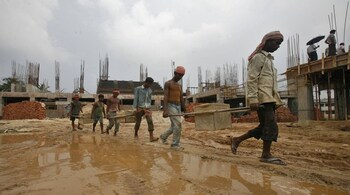
The right to livelihood encompasses more than just the ability to earn a living. It encompasses the right to work, the right to fair wages, and the right to decent working conditions. It acknowledges that livelihood is not merely a means of survival but an avenue for personal development, self-fulfilment, and social integration. However, the state of the current socio-economic conditions does not adequately reflect this constitutional provision.
Demographic Challenge
With a population of over 1.4 billion people, comprising approximately 17 percent of the global population, India is known for its youthful demographic. Over 60 percent of the country's population falls within the productive age bracket of 15-59 years, and the median age is below 30. This demographic advantage, often referred to as the "demographic dividend," has prompted India to pitch itself as an attractive destination for investment. However, the widening gap between the aspirations of the youth and the available employment and entrepreneurship opportunities poses a significant challenge for policymakers.
India has faced micro-operational economic challenges in recent years, such as declining bank savings interest rates, reaching as low as 3 percent, while inflation has remained around 6 percent. Despite these affecting individuals at micro level, India has had continued economic progress at aggregate level. As a global economic power, but with a large population, India must contend with the constraints of intense competition for financing needs and fiscal pressures. These factors further exacerbate the gap between the expectations of the country's young population and the opportunities available to them.
India's economy has primarily relied on labour cost advantages rather than value-added activities. Unfortunately, a substantial portion of the workforce possesses outdated or irrelevant skills, whether in blue-collar, white-collar or informal labour markets. In addition, each of its states faces unique challenges in creating employment and entrepreneurship opportunities based on their available natural resources and traditional markets. This plays out largely in their ability to generate revenues at the state level, and the political outcomes of future-based policy or welfare promises.
Need For Inclusive Development
India cannot afford to become solely reliant on welfarism. The potential risk lies in the ability of millennials or GenZ, who may be forced to retire from full-time income-generating activities by the age of 45-50 years, due to the emergence of the gig economy. In a low-savings-interest-rate era characterised by increasing services inflation, food inflation and healthcare costs, sustaining a livelihood based solely on accumulated savings becomes challenging. Moreover, the increasing human longevity adds another layer of complexity, potentially impacting the emotional and mental well-being of individuals. These are larger risks to society in general, with implications on the economy as well as politics.
To attract contextual developmental finance with sustainable framework that promotes liveability, various aspects need to be addressed. This includes exploring potential domestic and international development finance investors who align with inclusive development rather than mere poverty alleviation. This philosophy has the potential to create grassroots impact and should focus on guaranteeing every Indian access to skilling, education, and credit.
Skilling initiatives cannot succeed without simultaneously improving the primary and secondary education system. The current system does not adequately prepare students for employability, with many graduates lacking a practical understanding of the industry's realities. The National Education Policy's aim to revamp the education pedagogy and incorporate multiple skills into the mainstream system is commendable. However, to ensure success, there must be an emphasis on upgrading teacher development programmes. By integrating skilling into the education framework, it gains respectability and is not seen as an alternative to mainstream education.
Corporate India has made limited efforts in skilling initiatives, with only a few notable exceptions. It is crucial for the corporate world, academia, and policymakers to recognise the significance of building a robust skilling framework. Respectability and the opportunity to make a living are essential aspects of successful skilling initiatives. Skilling should be seen as a continual journey rather than a one-time project. Additionally, incorporating entrepreneurship into the education-skilling ecosystem requires facilitating access to affordable and timely credit. Policy initiatives such as credit scoring mechanisms and digital lending partnerships between banks and fintech companies can contribute to enhancing credit access for the newly skilled individuals.
A comprehensive plan needs to be prepared by developmental economists in conjunction with policy and financial experts, to pave the way for a "fundamental right to livelihood" strategy. Such a strategy can set a goal of achieving a $12 trillion GDP by 2035. It requires the convergence of policy development, political will, and capacity building for impactful projects. Real-time measurement mechanisms for impact assessment are also crucial.
Srinath Sridharan is Author, Policy Researcher & Corporate advisor. Twitter: @ssmumbai. Views are personal, and do not represent the stand of this publication.
Discover the latest Business News, Sensex, and Nifty updates. Obtain Personal Finance insights, tax queries, and expert opinions on Moneycontrol or download the Moneycontrol App to stay updated!





