

Lenders in the world’s two most-populous nations are having very different problems with monetary and fiscal taps. In China, creditors are drowning in cheap central-bank cash, but loan demand is muted. In India, banks are in the middle of their fastest expansion in a decade, but they’re parched for liquidity.
While the Chinese authorities’ struggle to stimulate the economy with 3 trillion yuan ($418 billion) in long-term cash injections has the world’s attention, the Indian deficit — the widest since 2010 — is also beginning to worry investors.
Barely a few months before the next general election, Prime Minister Narendra Modi’s administration has cut back on spending. That’s hurting lenders. The funds that left bank accounts as advance tax payments by companies in December would only return as deposits as New Delhi starts writing checks to contractors working on government projects. But with the fiscal year approaching its March 31 end, there’s no sign of a last-minute acceleration.
The liquidity drought may be deliberate. Unlike Beijing, New Delhi has every reason to be sanguine about growth. A 7 percent-plus rate of economic expansion gives it breathing room to slay inflation before embarking on a fresh investment spree after the polls. Unless the Modi government surprises analysts by announcing a populist spending program in its Feb. 1 budget, the reasonable assumption is that it’s angling for an upgrade to its sovereign rating, which is perched at the lowest rung of investment grade. Meanwhile, the monetary authority is seeking to buttress its credibility as an inflation fighter.
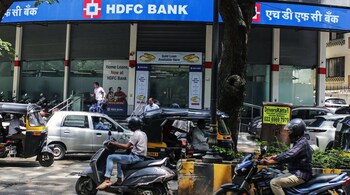
The all-around tightfistedness isn’t helping banks. Dismal quarterly results from HDFC Bank Ltd., India’s largest lender by market value, have made it the worst-performing stock on the benchmark Nifty Index this month. The 5 percent drop in the S&P BSE Bankex index since the end of December has also shone a spotlight on a near-$40 billion liquidity deficit in the banking system last week.
Then there’s the upcoming election, the most expensive in the world. A repeat of the 2019 poll, when politicians spent $9 billion in the lead-up, a lot of it in hard cash, will worsen lenders’ funding challenge. Before the 2019 polls, currency in circulation had risen by more than 9 percent in 20 weeks. It took several months for the money to go back into the banking system.
The fiscal authority is perhaps waiting for a deluge of foreign money
after JPMorgan Chase & Co adds India to its emerging markets bond index in June. HSBC Asset Management is predicting $100 billion in inflows in the coming years. Still, courting foreign investors on a more durable basis will require fixing the government’s rickety fiscal house. The Modi administration wants to make a start by not reporting a deficit much higher than the budgeted 5.9 percent of gross domestic product for this fiscal year, even though GDP is going to be a lot lower than it had assumed. (The 7.3 percent real, or inflation-adjusted, growth is on the back of an 8.9 percent nominal expansion, against an initial estimate of 10.5 percent.)
The other important actor in the liquidity drama is the central bank. After the US Federal Reserve starts reducing interest rates, the Reserve Bank of India will come under pressure to do the same. But the RBI’s tightening is yet to transmit fully through the economy. The stock market is frothy, and inflation has been unmoored from 4 percent — the midpoint of its 2 percent to 6 percent target — for so long that there’s a real danger that people will stop believing that the monetary authority is committed to achieving it.
Hence, the RBI, too, appears reluctant to ease the liquidity shortage, lest lenders become too comfortable and stop mobilising deposits. The monetary authority wants banks to pay extra for funds and charge more on loans, thus completing the transmission of higher policy rates.
The problem is that credit demand is high for unsecured consumer loans, and pushing more of it out the door may lead to concentration risk. Demand for advances from industrial firms is weak and might not hold up if borrowing costs are higher for longer. That could delay a post-election investment boom. The RBI may have no choice except to ease the crunch with a durable liquidity infusion. Sustained tightness “could prove to be onerous for borrowers,” says Soumyajit Niyogi, an analyst at India Ratings, a unit of Fitch.
Indian banks’ price-to-book value of 1.8 is far higher than the multiple of 0.4 for their Chinese peers. The difference is understandable. With China Evergrande Group’s liquidation order by a Hong Kong court clouding the outlook for an already embattled housing industry, mainland banks will struggle to protect profit even by cutting deposits rates further. However, investors are only beginning to weigh the risk of a sharp squeeze on Indian banks’ margins if the liquidity drought drags on. Banks in both countries could be miserable, in different ways.
Andy Mukherjee is a Bloomberg Opinion columnist. Views do not represent the stand of this publication.
Credit: Bloomberg
Discover the latest Business News, Sensex, and Nifty updates. Obtain Personal Finance insights, tax queries, and expert opinions on Moneycontrol or download the Moneycontrol App to stay updated!





