

The UK government’s giant package of unfunded tax cuts hasn’t only endangered its economic credibility worldwide. It has also accelerated the destruction of Britain’s age-old reputation for reserve and pragmatism, its image as a nation worthy of admiration and emulation.
To be sure, nationalist histories in India, China, Egypt and many other countries long depicted the British ruling class as predatory and callously incompetent, plundering foreign lands for its wealth at home while inflicting immiseration on those it ruled abroad. Yet there always existed, beneath such resentment, a grudging regard for the inhabitants of a tiny island that had managed to conquer much of the world.
Even the most strident anti-colonialists in newly independent nations in Asia and Africa diligently copied the UK’s democratic and legal institutions, the typography of its newspapers, the cut of its bespoke suits. Generations of Anglophiles across the world dreamed of an England in which power and wealth combined perfectly with grace and style. In their awestruck vision, the winners of modern history comported themselves with seemingly effortless poise. The sleek daring of Aston Martin, the subtle glamor of Burberry and smooth-tongued prescriptions of the Economist — arguably, no other country has offered so many irresistible models to aspiring movers and shakers around the world.
It is now clear that Britain’s exuberantly successful branding postponed a necessary reckoning with its unproductive economy. Indeed, confronted with it, some of the country’s most powerful and influential people began entrenching the current regime of deception and self-deception. In the 2000s, as the war on terror began, Britain rushed to offer its long experience of subduing alien peoples to the US. In Afghanistan and then Iraq and Libya, the UK’s claims to imperial-era expertise were exposed as calamitously bogus. However, hubris and mendacity were by then deeply embedded in public life.
When the economy tanked after the financial crisis of 2008, the Conservative Party managed to blame, with the help of its cheerleaders in the media, a supposedly wasteful public sector for its banking disaster.
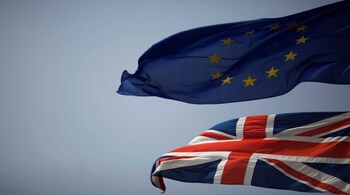
The Tories’ rotten economics of “austerity” was always likely to lead to scoundrel politics. And so, as spending cuts stoked mass disaffection, a section of the Tories began, in a desperate bid for fresh political legitimacy, to promote Brexit: a transparently fraudulent attempt to conjure an imaginary “Global Britain” by curtailing immigration and breaking with its immediate neighbors and main trading partners in the European Union.
The industry of demagoguery that sprung up around Brexit polluted British institutions. People around the world watched aghast as a once respectable Conservative Party and mainstream journalists abandoned their scruples.
Boris Johnson, a notorious mountebank, was elevated to 10 Downing Street. Finally sunk by the accumulated weight of his own lies, Johnson was replaced by not Rishi Sunak, a sober technocrat, but the darling of the right-wing media, Liz Truss, a self-confessed “thrill seeker” who loves to “embrace chaos.”
This parade of rogues and fantasists through the inner sanctum of British power was briefly obscured by the flawlessly choreographed funeral of Queen Elizabeth II. For a few hours, the world held its breath at the pageantry of an empire on which the sun never used to set.
Two weeks later, the funeral suddenly seems the last spectacle of the white-imperialist chic with which Britain has beguiled, for too long, itself and much of the world.
Certainly, most people can see, with appalling clarity since Brexit in 2016, the grim state of a country forced into swift decline by a heedless political class and media establishment. In a handful of years, everything that imperceptibly allowed a shrunken power to appear a self-confident political and moral authority is irretrievably gone.
In Britain itself, a long state of mourning rigidly enforced by the BBC as well as the rowdy tabloids revealed that the former masters of the universe know themselves to be feeble and diminished. The stiff-upper-lipped poise went missing as the country’s right-wing commentariat shrilly railed at some forthright accounts of the monarchy’s obviously undemocratic nature in the New York Times. Denouncing “anti-British propaganda” in the US press, Andrew Neil, a veteran television presenter and chairman of Spectator magazine, claimed, less than two weeks ago that “the condition of the country is actually rather good.”
Such harrumphing is usually among the last noises heard from insecure nationalists in the small countries of Asia and Africa as they go down the tubes. However, Britain hasn’t lost everything together with its reputation. Unlike much of the developing world, the country is endowed with immense wealth and talent. The tasks before it are both simple and enormous: quick economic U-turns, certainly, but also the replacement of a ruling elite that has repeatedly exposed itself as both treacherously deluded and inept.
Discover the latest Business News, Sensex, and Nifty updates. Obtain Personal Finance insights, tax queries, and expert opinions on Moneycontrol or download the Moneycontrol App to stay updated!





