

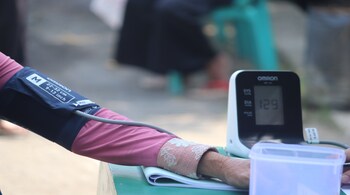
High blood-pressure afflicts 1.28 billion people across the globe, according to the World Health Organisation (WHO) and 66 per cent of them live in low and middle income countries such as India. Moreover, in India, more than a quarter of its 1.4 billion population is affected by high blood-pressure and this incidence increases to 60 per cent among the elderly aged 70 and above, says Dr Vinayak Agrawal, director and head of clinical cardiology and cardiac imaging, Fortis Memorial Research Institute (FMRI), Gurugram. The healthy range for blood pressure is a reading of less than 120/80 mm Hg while resting. Anything higher than 130/80 is a cause for concern. High blood-pressure, commonly referred to as hypertension, is the most common cardiovascular risk factor in the world and it is a major cause for concern for the Indian health policy as the country displays poor rate of blood-pressure control. “Only 15 per cent of Indians who suffer from hypertension take adequate control measures against the condition,” adds Agrawal.
That’s an ominous sign because high blood-pressure, apart from being a causal factor in the risk of cardiovascular diseases, can result in multiple different health problems. “Untreated hypertension increases the risk of stroke by causing weakened blood vessels in the brain to burst. Moreover, hypertension can lead to the hardening and thickening of arteries, which narrows them and impedes the smooth flow of blood, also causing a block — both of which can cause a heart attack. Over time, the heart has to work harder to pump blood against the elevated blood pressure and becomes enlarged and weakened, which can lead to heart failure. High blood-pressure could also impair kidney function by damaging blood vessels in the kidney and reducing their efficiency in filtering toxins and also affect eyesight by causing damage to the delicate vessels in the eyes,” says Dr Yogesh Shah, an internal medicine consultant at the Kokilaben Dhirubhai Ambani Hospital, Indore.
Weight and high BP
Obesity, weight gain and hypertension are closely linked; both increase the likelihood of developing high BP, warn experts. “Increased visceral adiposity (body fat) rather than subcutaneous adiposity (fat under the skin), is robustly associated with hypertension. Higher the BMI (Basal Metabolic Index), higher is the risk of developing hypertension,” noted Agrawal. Several mechanisms, including neurohormonal activation, inflammation and kidney dysfunction, have been proposed for this association. “Due to excess fat tissue, the total blood volume increases. This makes the heart pump more blood with each beat to meet the needs of the extra fat tissue which requires additional oxygen and nutrients. This in turn increases the workload of the heart and elevates blood pressure,” explains Shah.
The latest research presented at the European Society of Cardiology, the world’s largest heart conference, in August this year found that overweight people with even slightly elevated blood pressure are 35 per cent more likely to suffer a heart attack or a stroke while reducing their lifespan, too. The Swedish study observed more than 34,000 men and women in their 40s and 50s with a median follow-up for 27 years. The researchers analysed the associations between midlife metabolic syndrome (a cluster of three or more risk factors such as overweight, too much fat around the waist, high blood pressure, high cholesterol or high glucose levels) and non-fatal cardiovascular events and all-cause mortality. Of the total, 26 per cent subjects with metabolic syndrome died and 32 per cent participants with metabolic syndrome suffered from non-fatal heart attacks or strokes.
Be active, beat BP
However, the good news is that combating high blood pressure is not so difficult. All you need to do is lose weight. “Even a modest weight loss can lead to significant improvements in blood pressure. If you lose a kilogram of weight, your BP will likely be reduced by 1mm,” says Shah. And this is where an active lifestyle with healthy food and sleep patterns play a vital role. Engaging and any regular physical activity such as playing sports and walking strengthens the heart, enabling it to pump blood more efficiently with less effort. As a result, the force exerted on the arteries decreases, leading to a reduction in blood pressure. “Exercise favourably alters the neurohormonal, renal (sodium and water retention) and endothelial (inner lining of arteries) properties and leads to lowering of blood pressure. It also acts as an anti-inflammatory measure to eventually decrease the risk of cardiovascular disease,” adds Agrawal.
According to Agrawal and Shah a combination of aerobic activities and strength training is recommended to control high blood-pressure. Aerobic and cardio exercises such as brisk walking, jogging, running, swimming, cycling, gardening, tennis, badminton, and dancing are repetitive, rhythmic exercises involving mainly large muscles over a prolonged period of time and require a lot of oxygen. These movements elevate the heart rate moderately. “Moderately elevated heart rate and slightly laboured breathing over several minutes improve general fitness, enhance endurance and have been scientifically proven to provide cardiovascular benefits,” says Agrawal.
Anaerobic exercises are usually rapid and demand a lot of energy to produce force and are high-intensity, short burst activities. Weightlifting, 100m sprint or hurdles, fast skipping, 50m swim and high-intensity interval training are examples of anaerobic activities. Common daily life movements such as sitting down, standing up, jumping, squatting and all short-term life activities are also possible due to anaerobic energy production. Agrawal suggests at least 150 minutes of vigorous aerobic activity per week or equivalent exercise like brisk walking for 30 minutes, five days a week. Agrawal’s advice is that if you cannot dedicate 30 minutes to your chosen activity at one go, you can even do your exercise or walks as short duration activities throughout the day. “Both aerobic and anaerobic exercises have shown to improve cardiovascular health and decrease morbidity and mortality,” says Agrawal. Shah also suggested pilates, yoga and tai chi can be advantageous, especially when combined with aerobic activities.
Plank's your best bet
However, according to the latest research the best form of exercise to lower your blood pressure are isometric exercises such as plank holds and wall sits or chair pose with your back pressed against the wall. The study published in the British Journal of Sports Medicine in July was a meta-analysis of 270 randomised controlled trials involving more than 15,000 people conducted between 1990 and February 2023. It concluded the kind of exercise one does has a bearing on how much one benefits as far as lowering blood pressure is concerned. While high-intensity interval training (HIIT) has the minimum impact on reducing your blood pressure, isometric exercise has the maximum; it is more than twice as impactful as HIIT. Combination training, dynamic resistance training and aerobic exercise fall somewhere in between the two. Further analyses revealed that isometric wall squat and running were the most effective exercises for reducing both diastolic and systolic blood pressure.
Exercise your way to normal blood pressure
The best exercises to manage blood pressure are those that focus on improving cardiovascular fitness and overall health, says Rahul Basak, a format head at Cult.fit. “These exercises help lower blood pressure by strengthening the heart, improving blood vessel function, and promoting weight loss or weight management,” he adds.
Basak suggests the following routines if you are looking to manage your hypertension:
1. Aerobic exercises
Brisk walking, cycling, swimming, stationary biking for 30-60 minutes at least five days a week. Gradually increase the duration and intensity or pace over time.
2. Strength training
Perform exercises and their variations that focus on major muscles. Push-ups, squats, lunges and deadlifts are some exercises that target the big muscles in the human body. Aim for 10-15 repetitions of each exercise, 2-3 sets of each. Perform two-three days a week, with rest days in between. Gradually increase the weight or resistance over time.
3. High-Intensity Interval Training (HIIT)
Alternate between high-intensity bursts (e.g. sprinting, jumping jacks) and short recovery periods. For example, 30 seconds of high-intensity followed by 60 seconds of low-intensity or rest. 20-30 minutes per session will do the trick. Do it at least two-three days a week. Gradually increase the intensity or reduce rest periods as your fitness improves.
4. Yoga and relaxation routine
Incorporate a mix of yoga poses, deep breathing exercises and meditation, 30-60 minutes per session for two-three days a week.
5. Tai Chi
Tai Chi exercises involve slow, flowing movements and deep-breathing. Practise 30-60 minutes per session, for two-three days a week.
6. Isometric holds
Include isometric holds such as planks, chair pose, hollow rock hold and side planks at the end of your training session at least thrice a week. Start with 3 sets of 30 seconds of two isometric moves per session and build up to a minimum of one minute.
Precautions for high BP
Consult a doctor before starting any exercise routine.
Begin with low-intensity exercises, gradually progressing in intensity and duration.
Regularly monitor blood pressure so as to understand how the body is responding to exercise.
Hydrate properly before, during, and post-exercise.
Avoid overexertion and listen to your body.
Any chest discomfort which increases on walking or excessive breathlessness or dizziness are red flags. Stop exercising and seek medical help.
Warm-up and cool down prevent sudden blood pressure fluctuations and promote overall well-being.
Discover the latest Business News, Sensex, and Nifty updates. Obtain Personal Finance insights, tax queries, and expert opinions on Moneycontrol or download the Moneycontrol App to stay updated!





