

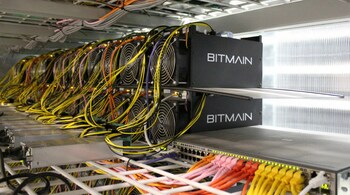
China may soon start regulating the electricity supply to the bitcoin miners to curb power usage. The central bank in China has told a top-level government internet finance group that it may ask local bodies to regulate the supply to gradually reduce the scale of their production, reported Reuters, citing a source.
The news agency reported that People’s Bank of China mentioned this to the members of Leading Group of Beijing Internet Financial Risks Remediation at a meeting at the end of 2017.
China is said to house the majority of mining firms in the world. These firms use a massive amount of electric power to run computers which solve complex mathematical problems in order to mine cryptocurrencies like bitcoin.
As per an estimate, in the world, over 37 TWh electricity is being consumed every year. This is more than the annual electricity used by about 160 countries in the world.
Explainer: What is bitcoin and how does it work?
In September, China had declared initial coin offerings (ICOs) as illegal and banned all fundraising activities through this medium.
Initial coin offering or ICO is a crowdfunding method where new cryptoassets raise capital in exchange for new tokens with established ones like bitcoin, ether or even with fiat currencies like the US dollar.
At that time China's central bank had said that ICOs are an unauthorised fundraising tool that may involve financial scams and pyramid schemes, and which “severely disrupt the social and economic order.”
Since then, it has been speculated that the miners may be the next target of the communist regime.
Discover the latest Business News, Sensex, and Nifty updates. Obtain Personal Finance insights, tax queries, and expert opinions on Moneycontrol or download the Moneycontrol App to stay updated!





