In association with


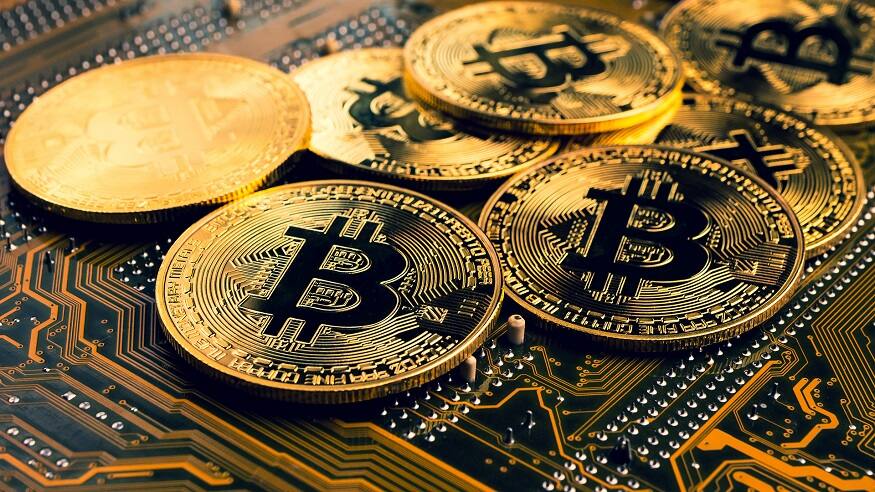
Bitcoin carries the badge of honour for being first crypto ever, and has over the years established an alternate system of payments, both peer-to-peer and even for financial intermediaries.
For long, it has been unrivaled in providing investors with superior and credible returns for investors. However, newer cryptos have evolved over the years with superior technological architectures, and analysts believe that they may now challenge Bitcoin’s leadership.
Let's take a look at whether Bitcoin will be able to survive and remain relevant as the crypto market evolves.
What Is Bitcoin?
Bitcoin is a digital currency / asset created in 2009 by a person or group under the pseudonym of Satoshi Nakamoto. It is widely utilized as a speculative store of value. It is decentralized, which means it is not governed by a central authority. Instead, it is run by thousands of computers all over the world, which are called nodes.
Bitcoin, like most cryptos, is based on blockchain technology, which secures crypto transactions by deploying tamper-proof techniques. Bitcoin is governed by programmed algorithms in a decentralized and democratic manner, rather than by a central bank.
Will Bitcoin stay?
The provision of decentralized financial (DeFi) systems is one of the core foundations of the crypto ecosystem. Bitcoin is the uncontested benchmark, as it represents an asset that cannot be controlled or manipulated by someone.
Bitcoin was created as a borderless, decentralized alternative to government- and central-bank-controlled fiat currencies, according to its pseudonymous creator Satoshi Nakamoto. But now, centralization has superseded decentralization as scaling issues plague Bitcoin's technology. This has resulted in a long history of forks and altcoins. Moreover, Bitcoin whales, or investors with large holdings of the crypto, are said to exert market control over its price.
Other Layer 1 blockchains, such as Ethereum, are Bitcoin's main competitors, and all of these contenders seek to address the blockchain trilemma (scalability, security, and decentralization) better than Bitcoin. Despite being the most decentralized blockchain, competitors easily outperform Bitcoin in terms of usefulness and scalability.
Despite all this, investments in Bitcoin have continued to grow. To determine how Bitcoin will fare in the future and whether it will stay, it’s important to look at 3 crucial factors.
1) Rising institutional adoption
That Bitcoin is a great store of value is one of the main reasons for its growing institutional acceptance. Due to excessive money printing and low interest rates, the value of cash has been rapidly falling. This is where Bitcoin is beginning to gain traction as an asset that can help mitigate the effects of global economic uncertainty.
Skeptics claim that this extremely volatile digital currency provides a platform for illegal behavior such as money laundering. They also argue that Bitcoin has no intrinsic value. On the other hand, proponents argue that Bitcoin’s hype is justified, and past detractors, such as JPMorgan and Goldman Sachs executives, are gradually hopping on the bandwagon. American financial services giant Fidelity too recently introduced Bitcoin as a retirement investment option, allowing companies to enable employees to invest up to 20% of their 401(k)s in bitcoin.
With cryptos exploding in popularity, Bitcoin and the broader crypto ecosystem are attracting a lot of institutional interest. A rising number of them are investing in numerous crypto initiatives while enterprises have come up with ways to help crypto become more widely accepted in the economy. As more organizations try to develop blockchain and crypto solutions, it's very plausible that Bitcoin could have longer staying power. As a result, despite its notoriously high levels of volatility, institutional investment is expected to help keep bitcoin rooted.
2) Acceptance by countries across the world
Because of Bitcoin's decentralized nature, it can be useful in times of national emergency in countries all over the world - particularly when economic problems cause fiat currencies to devalue due to hyperinflation. Furthermore, for those who live in economies that are unstable and unpredictable, investing in Bitcoin provides an unprecedented opportunity to protect assets from inflation, regulatory uncertainty, and political turmoil. El Salvador is the most well-known example of this, having declared Bitcoin legal tender in 2021, being the first country to do so. Not only El Salvador, even the Central African Republic recently approved Bitcoin as its legal tender.
3) Brand acceptance
Despite the fact that it is still not commonly used as a payment mechanism, crypto is beginning to be accepted by businesses all over the world. Due to the multiple benefits that crypto payments provide, major brands have begun to embrace them in order to gain a competitive advantage over their competitors. Some well-known firms that support and accept Bitcoin payments include Microsoft, Twitch, PayPal, Home Depot, and others.
Final thoughts
Bitcoin is the oldest crypto, with an unbeatable value proposition and features that make it the world's greatest meritocratic crypto. Despite the fact that Bitcoin is still trading below its all-time high made in November 2021, institutional confidence in the crypto remains high. Furthermore, because Bitcoin was the first crypto to be established, it has a unique network effect that makes it less susceptible to being effortlessly replaced.
Although it's difficult to anticipate how Bitcoin adoption will continue, the fact that the asset's technology is supporting economies in times of crisis indicates that the asset has staying power. While there are likely to be more surprises along the way until the global economic scenario improves, Bitcoin’s use case has proved that crypto are here to stay. And with WazirX, you can invest in Bitcoin with as little as Rs.100.
This article is authored by Pratik Ahuja, Associate Director – Marketing at WazirX
Disclaimer: Cryptos are unregulated virtual assets, not a legal tender and subject to market risks. The views and opinions expressed in the article are those of the author(s) and don't represent any investment advice or WazirX's official position.

