

The looming barrage of fresh US tariffs is leaving traders in emerging markets ready to bolt at the slightest whiff of risk.
Levies set to land on April 2, combined with a deteriorating outlook for the US and signs of an economic renaissance in China and Europe, mean investors are preparing for new opportunities while guarding against surprise losses.
Traders are getting increasingly anxious. Demand is rising for hedges to offset the risk of EM exchange rates weakening against the greenback, data suggest. The spread between three-month call and put options for the dollar against emerging-market currencies climbed to the highest since October 2023 this week, according to a JPMorgan index. A measure of EM credit risk is hovering near a four-month high.
The ratcheting anxiety was on display in Jakarta, Bogota and Istanbul this week, as equities, currencies and bonds tanked when foreign investors rushed to the exits.
“The moves may have been related to domestic issues, but the magnitude of the moves suggests investor caution particularly on emerging markets,” said Prashant Newnaha, a senior rates strategist at TD Securities. “Our sense is that investors will look to trim risk positions ahead of reciprocal tariffs coming into effect.”
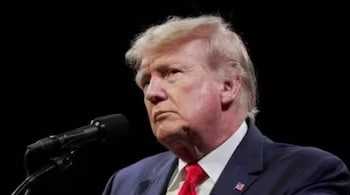
At the heart of the intensified skittishness are questions over whether Donald Trump’s import duties will stoke inflation and keep the dollar strong, or whether they’ll push the world’s largest economy into recession and drag others down with it. The extra yield investors demand to own emerging-market bonds versus US Treasuries hit a four-month high in March, Bloomberg-compiled data show.
Further fanning the anxiety is the fact that the scope and targets of the levies aren’t clear. Trump has dubbed his next announcement on tariffs “the big one,” promising reciprocal levies based on those that other countries place on US goods, along with tariffs on autos, semiconductors and pharmaceuticals. But his administration hasn’t specified who’ll be targeted and at what rates.
“That sheer uncertainty, even if only a fraction ultimately gets implemented, it’s having an impact on the delivery of some of those ‘animal spirits,’” said Manik Narain, head of emerging-market strategy at UBS in London. “There’s a real lack of conviction in EM.”
Emerging-market currencies dipped on Friday after Trump posted on Truth Social that April 2 would be “Liberation Day in America,” saying the US has been “ripped off and abused by every nation in the World, both friend and foe,” for decades. The currencies of Brazil, Chile, Turkey, Mexico and Thailand led declines.
And with Europe and China now offering alternative investment avenues to the US, the bar for exiting even the highest-yielding emerging-market assets — such as those denominated in Turkish lira — is now lower.
For Indonesia, a big exporter of commodities to China, concerns about its fiscal health and the political longevity of well-respected Finance Minister Sri Mulyani Indrawati kindled a stock market rout this week. Then on Thursday, legislation expanding the role of the armed forces was met with angry public demonstrations.
Fears about democratic backsliding played a role in Turkey’s recent market meltdown as well. Authorities detained longtime President Recep Tayyip Erdogan’s top political rival on corruption charges on Wednesday, triggering a brutal selloff in stocks and the lira.
While that rout was an idiosyncratic case exacerbated by a “super crowded” trade and technical issues, the riskier backdrop has led to sharper moves, said Guillaume Tresca, global EM strategist at Generali Investments.
“The uncertainty related to tariffs and higher volatility could have led fast-money accounts to close more rapidly their TRY trades,” Tresca said. “It is a by-product of a more volatile and uncertain environment.”
Discover the latest Business News, Sensex, and Nifty updates. Obtain Personal Finance insights, tax queries, and expert opinions on Moneycontrol or download the Moneycontrol App to stay updated!





