






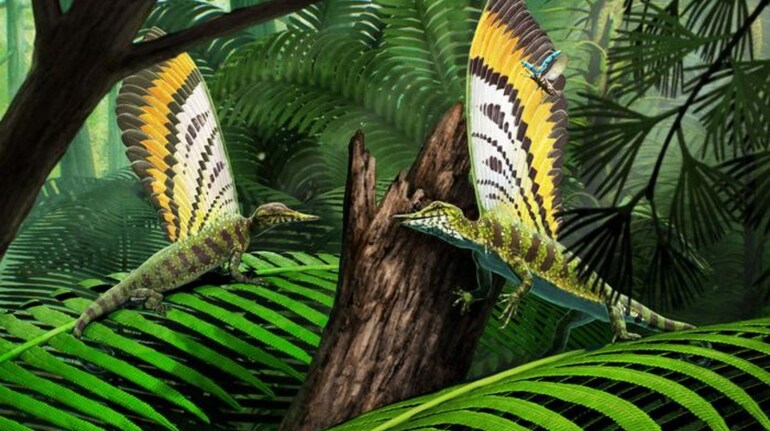
A fossil once mistaken for a common reptile has surprised scientists. Hidden in a private collection for decades, it revealed an unexpected tale. Known as Mirasaura grauvogeli, this tiny tree-dwelling reptile lived 247 million years ago. Now, researchers say it had feather-like skin appendages never seen in reptiles before.
Feather-Like Features FoundMirasaura was uncovered by a team led by German palaeontologists. Their findings were recently published in the journal Nature. The creature had a long crest along its back, formed from overlapping appendages. These were complex in structure but lacked the fine barbs of bird feathers. Instead, they had narrow central ridges giving them a feather-like outline.
Unlike modern feathers, these features evolved separately. Scientists believe they served as display structures for communication or mating. This suggests the development of such skin outgrowths began much earlier than thought.
Challenging Old AssumptionsExperts had long believed feathers came from dinosaurs and birds. But Mirasaura, which predates dinosaurs, shows that complex skin forms evolved independently. Genetic evidence hints these traits began over 300 million years ago.
“Mirasaura changes how we view reptile evolution,” said Dr. Stephan Spiekman from Stuttgart’s State Museum of Natural History. His co-lead, Prof. Rainer Schoch, added that evolution often repeats similar features in unrelated species.
Life Among Triassic TreesMirasaura belonged to a bizarre group called drepanosaurs. These tree-dwellers had grasping limbs and tails used for climbing. Their skulls were bird-like, with forward-facing eyes and long snouts. The structure suggests they hunted insects from tight tree crevices.
Advanced imaging revealed melanosomes—tiny pigment carriers—in its preserved skin. These were similar in shape to those found in modern bird feathers. This supports the idea that the appendages had both structural and colour-related functions.
Legacy of a Forgotten CollectionThe fossil was first uncovered in Alsace in the 1930s by collector Louis Grauvogel. His finds stayed in family hands until 2019, when they were handed to the Stuttgart museum. Careful re-examination led to the identification of Mirasaura and its extraordinary features.
This rare discovery highlights how even old collections still hold surprises. As researchers continue studying the fossil, it promises more insight into early reptile life and evolution’s complex path.
Discover the latest Business News, Sensex, and Nifty updates. Obtain Personal Finance insights, tax queries, and expert opinions on Moneycontrol or download the Moneycontrol App to stay updated!
Find the best of Al News in one place, specially curated for you every weekend.
Stay on top of the latest tech trends and biggest startup news.




