

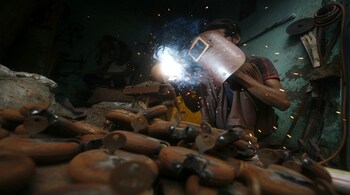
A handful of companies have been allowed to operate their factories with 100 percent workforce in multiple shifts by the Haryana government.
Announcing significant relaxations of the coronavirus lockdown rules vis-à-vis deployment of labour, the Bharatiya Janata Party (BJP) government in Haryana let carmaker Maruti Suzuki and auto component maker Sona Comstar bring the entire workforce to their plants.
For live updates on coronavirus, click here
Earlier, Sona Comstar was operating its four plants with just half of the workforce, who were working only one shift per day. Now, they are planning to increase the number of shifts at all its four plants spread across Gurugram and Manesar, reported the Business Standard.
The development has been confirmed by Sunjay Kapur, Chairman, Sona Comstar. He said: “Yes, we have received permission to operate with 100 percent manpower in all our Haryana plants and the factory can be operational 24x7. We are doing only exports so far and are waiting for local demand. Manpower is an issue as migrant workers have gone back. We will have to work on bringing them back.”
Similarly, Maruti Suzuki plans to operate its Manesar plant, which opened for production on May 12, with 75 percent of its workforce now. Their Gurugram plant is yet to start operations.
RC Bhargava, Chairman, Maruti Suzuki, said they have received permission only to use 75 percent of their workforce and has been allowed just one shift as yet.
Notably, before the relaxations were offered to certain firms, all companies had to function with 20 to 50 percent of their workforce in Haryana. The state has recorded 780 coronavirus cases so far, of whom, 11 have died.
Discover the latest Business News, Sensex, and Nifty updates. Obtain Personal Finance insights, tax queries, and expert opinions on Moneycontrol or download the Moneycontrol App to stay updated!





