




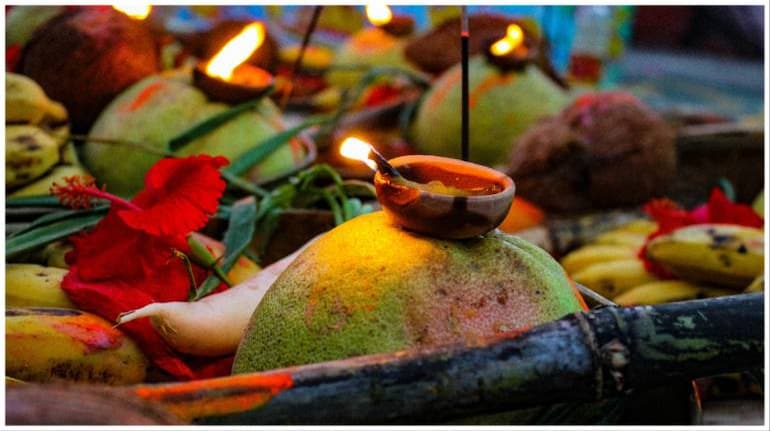
Chhath Puja will be observed from November 17-20, this year. The dates of the puja are decided on the basis of the Hindu calendar. It falls six days after Diwali, on the sixth day of the lunar month of Kartika.
The rituals are observed for four days and involved bathing, fasting and abstaining from drinking water.
Chhath Puja 2023: HistoryChhath Puja has been performed since the vedic era and many stories regarding its origin have been shared by others.
Legend has it that Chhath Puja was performed by Karna, the child of the Sun. Karna was the king of Anga Desh, which is believed to be in present day Bhagalpur in Bihar.
It is also said that Draupadi observed the fast to beat the obstacles and hurdles which came in her and Pandavas' lives. It is also believed that Sit was blessed with her two boys-Luv and Kush- after she performed the Chhath Puja.
Chhath Puja 2023: SignificanceChhath Puja is celebrated to offer thanks to the Sun God and give him gratitude. The ritual is observed in Bihar and parts of Uttar Pradesh, Bengal and Jharkhand.
Chhath is observed two times a year, first in the month of Chaitra and later in the month of Kartika, which is considered the bigger occasion of the two.
Chhath Puja 2023: RitualsChhath Puja is observed for four days. The first day is called Nahaay Khay, where people take a holy bath and clean their house. Then, a pure satwik meal containing bottle guard, bengal gram lenthis are prepared. This is served with rice to the deity.
The second day is called Rasiaav or Kharna. On this day, the worshipper refuses to even take a sip of water, but later in the evening have rasiaav made of jaggery and roti.
The third day is called Sanjka Aragh, where people make prasad for the deity and in the evening offer those to the Sun as Arghya at a pond or a riverbank.
The fourth day is called Bhorka Aragh which is same as the third day and following this, worshippers break their fast.
Discover the latest Business News, Sensex, and Nifty updates. Obtain Personal Finance insights, tax queries, and expert opinions on Moneycontrol or download the Moneycontrol App to stay updated!
Find the best of Al News in one place, specially curated for you every weekend.
Stay on top of the latest tech trends and biggest startup news.




