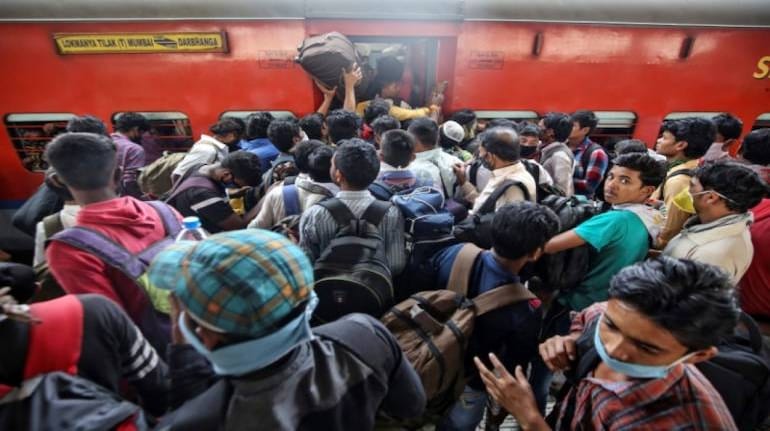
If issues such BS-VI switchover and coronavirus-induced lockdown - that led to zero auto sales in April - weren’t enough, the automotive industry could see itself grappling with the third challenge – loss of contractual labour.
That is, if the inter-state migration does not stop.
The automotive sector employs over 37 million people (directly and indirectly) in India spread among vehicle and auto component making companies, dealerships, service centers, road-side garages, auto spare parts shops and transport entities to mention a few. A sizeable portion of this comes from semi-skilled and or unskilled contractual labour.
The auto parts segment would be the worst hit because of the exodus. At least 70 percent of the 5 million workforce employed in the auto component space consists of semi-skilled and or unskilled contractual labour, according to the Automotive Component Manufacturers Association (ACMA).
The Tier 2 and Tier 3 auto parts making companies that supply to either Tier 1 auto parts vendors or in some cases directly to vehicle makers stand to get impacted the most from the loss of workforce.
A senior executive from a Delhi-based auto component company said if the migration is not stopped it would lead to dearth of workforce and it would also make cost of labour more expensive. "There is also no surety that these migrants will have the confidence to return to their jobs anytime soon,” he said, requesting anonymity.
Auto companies are resuming operations majorly to finish any 'work in progress' and make do with existing parts inventory to meet booking requests.
Besides the shop floor contractual workforce is extensively used in areas where hard labour is required like foundry divisions and building construction. Several transport companies have already reported shortage of drivers. This again is a critical area where auto components and even completely built vehicles have to be shipped on time.
The timing could not have been worse because vehicle and component makers have got the go-ahead from local administrations to resume production. Though the green signal has come with strict riders, companies are expecting to run their factories at 30-35 percent utilisation rates for the time being.
Auto companies are individually securing permissions from respective local administrations and state authorities to resume operations. Priorities are being given to factories that are located in the green or orange zones.
If the government announces any financial assistance directed towards the sector then demand is expected to climb faster forcing the entire ecosystem to dial up efforts.
Representatives of the auto industry have had several meetings with the government in recent days including the Ministry of Heavy Industries to place their demands that include GST cut and the launch of vehicle scrappage incentive scheme.
Vinod Aggarwal, managing director and CEO, VE Commercial Vehicles (VECV) said, “The shortage of labour due to the mass migration will be there for some time but it’s not a big worry point right now. The requirement of workforce will be less. When demand picks up they will be back. There are larger issues to deal with.”



Discover the latest Business News, Sensex, and Nifty updates. Obtain Personal Finance insights, tax queries, and expert opinions on Moneycontrol or download the Moneycontrol App to stay updated!

Find the best of Al News in one place, specially curated for you every weekend.
Stay on top of the latest tech trends and biggest startup news.