One quick thing: Elon Musk is no stranger to shaking up the tech industry, and his latest move is no exception. Despite expressing concerns about AI, he has now revealed plans to launch his own version of ChatGPT, dubbed TruthGPT. Find out more
In today’s newsletter:
- India gets its first Apple Store
- UPI coming soon to Sri Lanka and Thailand
- Rivals make merry as Blinkit workers strike
Was this newsletter forwarded to you? You can sign up for Tech3 here
 Top 3 stories
India gets its first Apple Store

If you're looking to witness fandom and customer dedication towards a company, look no further than Apple. The opening of Apple BKC in Mumbai serves as undeniable proof of this phenomenon.
Driving the news
Why it matters
These stores are expected to help Apple in gaining a stronger foothold and tighter control over customer experience in the country, at a time when Indian customers are purchasing more premium products across a wide range of product categories.
Apple currently holds a 45% share of the premium smartphone market in India (above Rs 30,000), a segment that is small but growing in the country. Overall, Apple holds a 5% share of the country's smartphone market.
Make in India push
The Cupertino tech giant is also doubling down on India to become a key global manufacturing hub amid plans to diversify manufacturing beyond China.
- Apple exported about $5 billion-$5.5 billion worth of iPhones from India in FY23, accounting for nearly half of the country's mobile phone exports, according to industry estimates.
P.S. Do catch our live coverage of the Apple BKC launch event. Crunched for time? Catch our highlights video.
UPI coming soon to Sri Lanka and Thailand
Unified Payments Interface (UPI) is expanding its reach once again! Sri Lanka and Thailand are the next destinations on its itinerary.
What's happening
Tell me more
In February, Prime Minister Narendra Modi and his Singaporean counterpart, Lee Hsien Loong, launched cross-border linkages between the two countries using their respective Fast Payment Systems – UPI and Singapore's PayNow. Since then, UPI has garnered significant global interest.
- Linking UPI with other countries’ payments mechanisms will help users make payments faster and lower the cost of fund transfers
What do the numbers say
UPI has grown dramatically over the years. In fact, the number and value of transactions have increased dramatically.
- In India, over 68% of digital payments are made through UPI
- Around 8.7 billion transactions were recorded via UPI in March 2023 alone and overall growth of 82% in FY23 over the previous year
Rivals make merry as Blinkit workers strike

As the saying goes, "One person's loss is another person's gain," and this is precisely what we're seeing in the quick-commerce industry.
What’s happening
Blinkit's delivery partners in the Delhi-NCR region are up in arms after the company reduced their payment per order from Rs 25 to Rs 15.
With the need for groceries still present, customers are shifting to other apps, including Swiggy's Instamart, Y Combinator-backed Zepto, Reliance-backed Dunzo, and Tata's BigBasket, to order their essentials. As a result, these apps have experienced a temporary surge in order volumes of up to 40%.
- In addition to the increase in business, these rivals have also enjoyed a drop in marketing costs of up to Rs 1 crore in the last five days
But it's not all rosy
Quick-commerce players who are currently benefitting at Blinkit's expense understand that the surge is temporary, and customers will eventually revert to using their preferred app.
"We saw our food delivery orders almost double when one of our rivals saw a strike in Chennai recently. But it was back to normal when the strike ended,” said an executive of a quick-commerce company.
But why is Blinkit lowering payouts?
Quick-commerce is a relatively new segment, and in the first few months, many companies invested heavily to create a category that enticed customers with attractive offers and swift delivery services, both at the same time.
Now that there is a category, quick-commerce businesses can shift their focus to profitability, especially at a time when capital is scarce.
Find out more
MC Opinion: Bournvita controversy a wake-up call for Big Food
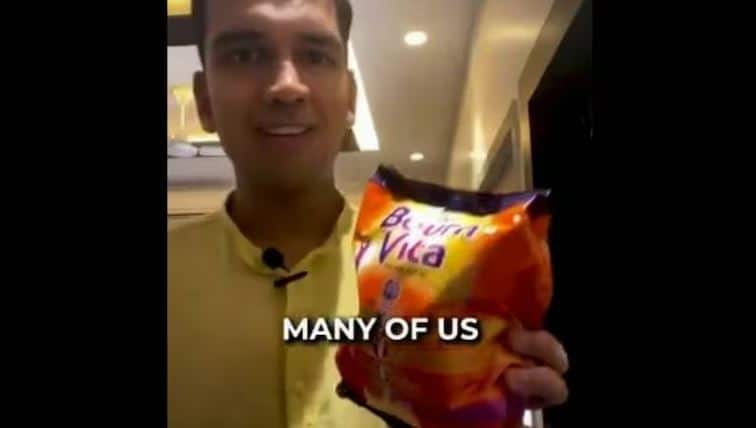
Cadbury's legal notice to influencer Revant Himatsingka for his Instagram Reel about Bournvita's dubious health benefits has backfired, drawing attention to the drink's high sugar content.
- As per its own label, every serving of Bournvita has 7.5 gms of sugar, corresponding to one and a half teaspoons.
As awareness grows in India about the dangers of processed and synthetic foods, food and beverage companies should be planning for a move away from them, writes senior journalist Sundeep Khanna in an opinion piece for us.
Read the full article
Today in tech history: Osborne Executive introduced

On April 18, 1983, the Osborne Computer Corporation announced the Osborne Executive portable computer. This device was intended to be the successor to their popular Osborne 1 computer. However, it is believed that this announcement is what led to the downfall of the company, in what is now known as the Osborne Effect.
Quick trivia: Legend has it that dealers cancelled Osborne 1 computer orders because the new product was announced too soon. The company's cash flow decreased, making it difficult to operate. Eventually, the company cancelled its IPO and filed for bankruptcy. (Picture credit: Wikipedia)





 PREVIOUS
 Tweet of the day
 QUICK HITS
 GLOBAL PICKS


