Taliban claim to have captured the last pocket of resistance in Afghanistan, the Panjshir Valley. A look at how the valley has been a tough grind for the group.
"With this victory, our country is completely taken out of the quagmire of war," Taliban chief spokesman Zabihullah Mujahid said in a statement.
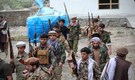
Massoud, who leads a force made up of remnants of regular Afghan army and special forces units as well as local militia fighters, called for a negotiated settlement with the Taliban before the fighting broke out around a week ago.
Panjshir, a rugged mountainous valley north of Kabul still littered with the wreckage of destroyed Soviet tanks, has proved very difficult to overcome in the past.
As Taliban leaders hold meetings and promise a government in the coming days, technical teams from Qatar and Turkey are working to get the civilian airport operational.
A Taliban source said fighting was continuing in Panjshir but the advance had been slowed by landmines placed on the road to the capital Bazarak and the provincial governor's compound.
Fighters from the National Resistance Front -- made up of anti-Taliban militia and former Afghan security forces -- are understood to have significant weapon stockpiles in the valley, which lies around 80 kilometres (50 miles) north of Kabul.
Afghanistan’s acting President Amrullah Saleh, 48, weighs in on the possible consequences of Taliban's Kabul takeover, the role of Pakistan in sponsoring insurgency against western allies, the failure of Doha peace talks and how lack of political will in Washington DC led to the present situation in Afghanistan, in an exclusive interview to CNN-News 18
But experts say a successful resistance is highly unlikely — and could potentially aggravate Afghanistan's already considerable problems.