






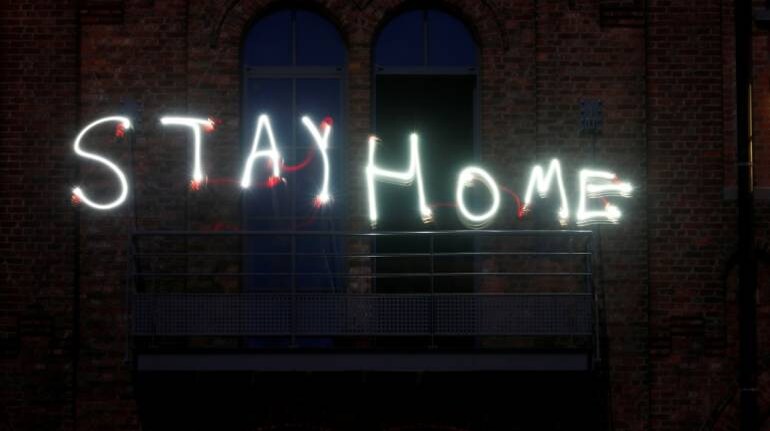
Leading politicians, popular temples, a global Muslim evangelical organization, society blades and event organisers have all repeatedly flouted health directives and transgress new pandemic norms across the country, exposing thousands of people to the deadly scourge. In the absence of rigorous testing, it is still early to determine the extent of damage caused.
In this willful act of defiance, politicians have led the charge. After much reluctance, handwringing and public outrage, former Karnataka Chief Minister H D Kumaraswamy, has come to the conclusion that his son Nikhil’s wedding will be a low-key affair in the presence of close family members on April 17, given the compulsions of COVID-19.
The decision did not come easy after plans of a huge fat wedding hit the headlines. Karnataka’s celebrated political family was determined to go ahead with a large public gathering, irrespective of the cost, unmindful of the fact that Bengaluru is one of the six metros in India that has been declared a hot spot with strong restrictions on movement of people and on holding large gatherings.
In distant Bengal, feisty Chief Minister Mamata Banerjee, in a none-too-subtle attempt at cocking a snook at Prime Minister Narendra Modi, the BJP and its policies, has permitted the holding of large Friday jumma prayers. Last week, images of a packed mosque full of believers in Murshidabad became viral on the social media.
The Union Home Ministry has shot off a letter to the West Bengal government asking them to take strict action against those flouting lockdown rules in Murshidabad and elsewhere in the state.
Given the fact that the country is dealing with a self-inflicted Tablighi Jamaat scare, a mass Muslim evangelical event held in Delhi last month that is sending shivers down the spine of Corona virus-hit India, events such as organizing Friday prayers in Bengal aimed at forced secularization, are hardly likely to help.
The Delhi congregation, attended by more than 2,000 people, including foreign delegates, was organised by Tablighi Jamaat, a global Islamic missionary movement, which took place from March 13-15 in the capital’s Nizamuddin area.
Even as the fallout of the Nizamuddin fiasco is being assessed, the lens is on the Nalanda Markaz in Bihar. According to reports on April 16, 640 people attended the Nalanda Markaz, out of which more than 300 are untraceable. Of them, four have reportedly tested positive for the virus, prompting a massive manhunt by the Bihar Police and central intelligence agencies.
But the Tablighi scare is by no means the only blip on the radar. On April 14, the 129th birth anniversary of Babasaheb Bhimrao Ambedkar was celebrated with verve, both by the BJP and the Congress, at small functions away from the public eye. Nonetheless, they were all described as significant gatherings in large numbers that took place in various states, from UP to Karnataka.
Starting off as a solemn promise to maintain social distances, it petered out into large public processions in towns and suburbs, perhaps the spots most vulnerable to the corona virus and places that have witnessed virtually no testing of suspected cases at all.
In Assam earlier this week, politicians led celebrations on the state’s most important festival of the year, Rongali Bihu, which was held amidst `low key’ enthusiasm. They were led by Assam Chief Minister Sarbananda Sonowal, who appealed to the people to celebrate Bihu adhering to the protocols of social distancing put in place during the lockdown period to contain and control COVID-1. While the festivities were relatively muted, there were reports of social gatherings in the state’s interior towns, even though capital Guwahati itself was quiet.
Clearly, the political class across the country has dealt a body blow to the concept of social distancing. While it is relatively easier to impose curbs on the public, the lockdown rules do not apply to politicians, both national and local, who have quietly but steadily tip-toed past well laid down rules to do what they and their supporters have planned, never mind the homilies mouthed for the record.
Consider the following:
*** On April 16, people in Madurai, Tamil Nadu, participated in the funeral of a Jallikattu bull. Shocking images of people jostling against each other in confined spaces have prompted the authorities to lodge FIRs against those organizing the ritual.
*** On March 24, Ramnavami celebrations were held in many parts of the country, notably in UP, lead by the state’s heavyweight politicians. But long lines of those wanting to visit temples in Bengal, among other states, were also witnessed on the special day.
*** Despite Karnataka’s ban on mass gatherings, on March 15, hundreds of people attended the wedding of state legislator Mahantesh Kavatgimath’s daughter. Chief minister, BS Yeddyurappa, himself attended the ceremony.
*** A 70-year-old Corona virus-infected Sikh preacher took part in a fair in Punjab on March 10-12, putting thousands at risk. The preacher himself died due to COVID-19 on March 26. Around 40,000 of his devotees are now under isolation.
Clearly, no lockdown can be entirely successful if the public does not cooperate. It is virtually impossible to police every nook and cranny of the country and if even that were to be done, there is still no guarantee that rules will be followed to the last mile.
Ranjit Bhushan is an independent journalist and former Nehru Fellow at Jamia Millia University. In a career spanning more than three decades, he has worked with Outlook, The Times of India, The Indian Express, the Press Trust of India, Associated Press, Financial Chronicle, and DNA.Discover the latest Business News, Sensex, and Nifty updates. Obtain Personal Finance insights, tax queries, and expert opinions on Moneycontrol or download the Moneycontrol App to stay updated!
Find the best of Al News in one place, specially curated for you every weekend.
Stay on top of the latest tech trends and biggest startup news.




