




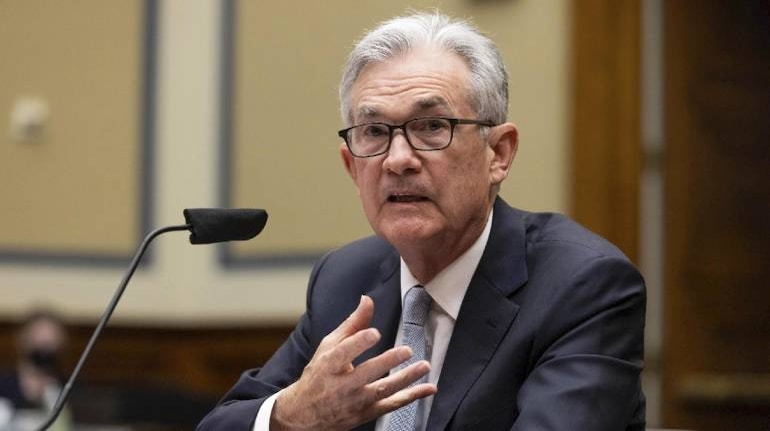
Fed chair Jerome Powell’s remark that “the time for moderating the pace of rate increases may come as soon as the December meeting” was enough to send US markets off to the races, with the S&P 500 up 3 percent and the Nasdaq up 4.4 percent on Wednesday.
Powell did say several other things that were not so bullish. He reiterated that although goods inflation is coming down, the labour market remains tight and wage growth is too high. He said, “Despite some promising developments, we have a long way to go in restoring price stability… It is likely that restoring price stability will require holding policy at a restrictive level for some time.” But the market chose to focus on the positives.
That was partly because the bears believed Powell would make his speech as hawkish as his Jackson Hole one, so that the message that financial conditions must tighten is driven home to the markets. That didn’t happen. The upshot: the probability that the rate hike at the FOMC’s next meeting on December 13-14 will be 50 basis points shot up while the probability of a 75 basis point increase fell. The odds of the peak rate being 5-5.25 percent have also been revised down by the markets and the peak is now expected to be 4.75-5 percent. And the probability that a rate cut will be on the cards next November, bringing the Fed Funds rate down to 4.25-4.75 percent, has gone up.
Another big reason for the optimism is the slight change of stance towards the COVID restrictions by the Chinese government, after the widespread protests last weekend. The Hong Kong market has moved up sharply on these hopes. China’s growth matters a lot for the global economy and we had a chart on China’s contribution to global growth in recent years.
The softening of the Fed’s hawkishness has led to a fall in the dollar. The USD-INR rate is now at around 81, well below its highs. The weaker dollar and the return of risk appetite have spurred portfolio flows to emerging markets, sending the Indian markets to new highs.
India’s GDP growth for the July-September 2022 quarter, at 6.3 percent, was exactly as the RBI had forecast. We pointed out that pent-up demand in contact intensive sectors such as trade, transport and hotels boosted consumption during the quarter. But as Gaurav Kapur, chief economist at IndusInd Bank says, external headwinds are strong and the RBI has forecast much lower growth for the second half of the fiscal year.
Nevertheless, the India Manufacturing Purchasing Managers Index for November shows strong demand, with companies reporting the quickest increase in new orders and production in three months. That’s an indication that demand has been sustained even after the festive Diwali season. Even better, the rate of input cost inflation is down to a 28-month low while output inflation was slight and at a nine-month low. Employment too rose and animal spirits are strong, with business sentiment at an eight-year high.
While the Indian manufacturing PMI showed a sharp expansion, the PMIs for most other economies in the region, such as China, Japan, South Korea, Taiwan and Vietnam showed a contraction in manufacturing activity in November. That explains the high premium the Indian market enjoys over its peers.
Why are the upbeat Indian PMI readings so much at odds with the poor showing by the manufacturing sector in the GDP numbers? One reason could be that the PMI survey is restricted to just 400 companies. The GDP data, on the other hand, takes into account a much wider range of firms. The difference is probably an indicator of the K-shaped recovery.
The latest turnaround in market sentiment has had an unexpected result -- the Chicago Fed’s Adjusted National Financial Conditions index shows that financial conditions have loosened considerably and are now at levels last seen in April 2022, when the Fed Funds rate was at a mere 0.25-0.5 percent. Hiking the Fed Funds rate to the current level of 3.75-4 percent seems to have had no effect on US financial conditions.
That is certainly not what Powell had intended. As Mohamed A El-Erian, president of Queens’ College, Cambridge University, and advisor to financial services behemoth Allianz, tweeted, “The more the Chair tilts his remarks dovish, the greater the loosening of financial conditions and, potentially, the bigger the risk to meeting the inflation objective.”
Investing insights from our research teamMultiplex sector: Why a disaster quarter doesn’t dim the upsideNavneet Education is ready to turn the pageEndurance Tech: India business remains the growth engine, outlook encouragingWhat else are we reading?Jay Powell is no dove (republished from the FT)
Oil Markets: Why 2023 is likely to be as volatile as 2022Start-up Street | When does a start-up stop being one?Unlocking state economic activity – key to harness India’s growth potentialGland Pharma’s Europe acquisition fails to excite investorsGovernment, RBI caution on cryptocurrencies has served India wellBharat Jodo Yatra | Marathon man’s journey is already legendary, but Rahul Gandhi must now walk the talkGujarat Elections | Why this contest is crucial for AAPTechnical Picks: Kotak Mahindra Bank, JK Lakshmi Cement, Guar seed, Canara Bank, TCS and USD-INR (These are published every trading day before markets open and can be read on the app).
Manas Chakravarty Moneycontrol Pro
Discover the latest Business News, Sensex, and Nifty updates. Obtain Personal Finance insights, tax queries, and expert opinions on Moneycontrol or download the Moneycontrol App to stay updated!
Find the best of Al News in one place, specially curated for you every weekend.
Stay on top of the latest tech trends and biggest startup news.




