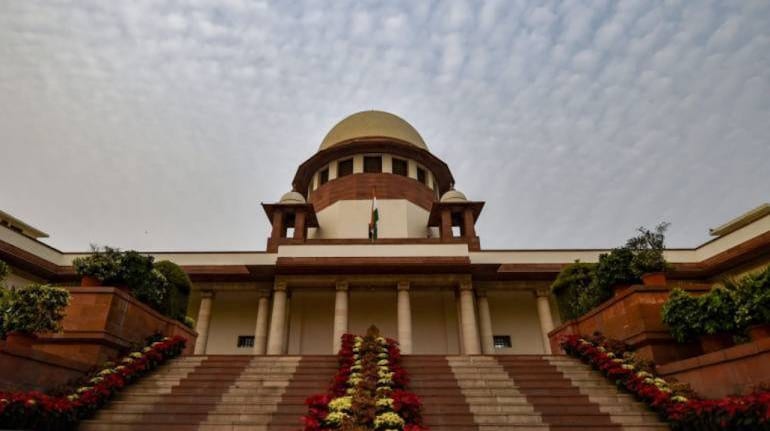
The Supreme Court of India is widely considered to be one of the most powerful courts (if not institutions) in the world. Its power to come to the rescue of any person whose fundamental rights are violated, as well as its powers under Articles 136 (appeals against orders of any court in India) and 142 (to pass any order so as to do complete justice in any case), give it a status that is perhaps unrivalled in modern jurisprudence.
However, what is often missed by the public is that our apex court is actually 12 to 15 different courts sitting in benches of two or three judges; each of these courts armed with the mantle of supremacy, and a constitutional protection from oversight. Given this, the downside should be obvious. Conflicting judgments are rife, which also means courts and tribunals below often get to choose the judgment they prefer to rely upon, which then gets appealed by the losing side, armed with another equally valid judgment from the apex court, adding to the pendency.
Take for example, two recent judgments on the consumer protection law, pertaining to remedies and compensation for delayed deliveries of flats by builders. Now, builders are notorious for delaying projects much beyond the scheduled delivery date. The contracts, each of them boiler plate agreements, which the consumer has no choice but to accept or leave, usually provide for compensation for delayed delivery, at the rate of Rs 5-10 per square feet per month. Compare that with the additional rent the consumer has to pay at an alternate accommodation, as well as the EMI payments that become due.
The National Consumer Disputes Redressal Commission has, for some time now, taken the view that such one-sided terms in agreements where the customer does not have a choice to negotiate equitable terms is not legally binding on him/her, and awarded interest at the prevailing bank rate for inordinately delayed possession (usually over one year).
In April, a two-judge bench of the Supreme Court took a view that was consistent with this in Pioneer Urban Land & Infrastructure Ltd. vs Govindan Raghavan, saying that the terms of the agreement was wholly one-sided and unfair to the flat purchaser, and permitted the purchaser to obtain a full refund, along with interest at 10.7 per cent p.a.
However, barely a month later, another two-judge bench took an almost contradictory view in DLF Homes Panchkula Pvt. Ltd. vs DS Dhanda, etc. etc., finding that the customer is (only) entitled to the consequences agreed at the time of executing the buyer’s agreement (Rs 10 per sq ft per month in that case). Guided by this judgment, the NCDRC now refuses to grant punitive compensation even for delays above three years, if the customer has taken possession.
Sometimes the contradictions happen on the same date. In June, former DGP of Kolkata Rajeev Kumar approached the Supreme Court for bail stating that the courts in West Bengal were on strike, and therefore he could not apply for bail there. His request was rejected. Almost simultaneously a different bench hearing a similar plea, granted protection to Praveen Agarwal, a district president of the Bharatiya Janata Party (BJP), from arrest, expressing anguish over the effect of the strike on litigants.
This piece does not seek to call one judgment or finding better than another — but to have the court speaking in two disparate voices does not align with its supremacy.
In August, in response to the mounting pendency, the government approved the increase in number of judges of the apex court to 34 (from 31), and the collegium has recommended judges to fill all these posts. However, it must be asked whether increasing judges is really the solution, or is it just like a band-aid to treat a muscle tear.
Pendency at the Supreme Court has many causes, but the most glaring is the fact that the apex court has been reduced to a mere appellate court (where all high court decisions are appealed and heard) rather than a court to interpret the Constitution, as it was originally intended. With judges engaged in hearing these appeals for a good part of their week, the development and streamlining of constitutional law has suffered.
Many solutions have been proposed, including bifurcating to court into an appellate court and a constitutional court, as well as creating an intermediate court to hear appeals from high courts. Merely increasing the number of judges though, will not solve any problem.
Abraham C Mathews is an advocate based in Delhi. Twitter: @ebbruz. Views are personal.
Discover the latest Business News, Sensex, and Nifty updates. Obtain Personal Finance insights, tax queries, and expert opinions on Moneycontrol or download the Moneycontrol App to stay updated!

Find the best of Al News in one place, specially curated for you every weekend.
Stay on top of the latest tech trends and biggest startup news.