

Sumanth Raman
It all started with a simple kolam (rangoli). On December 29, seven youngsters, mostly girls, assembled on the popular Besant Nagar Beach in Chennai and started to draw rangoli designs on the road. Along with the kolam designs they wrote ‘Say No to CAA and NRC’. The Chennai Police, who normally are on patrol on the beach and had also been possibly alerted about the ‘Kolam Protest’ on social media, swooped on the youth and hauled them away to the Besant Nagar Police Station.
Police action was covered by the media and videos of the police dragging away the protesting women went viral on social media evoking sharp criticism. Lawyers who tried to intervene were not allowed to do so and within an hour the incident became the talking point across the city and beyond.
According to the police, the organisers had not obtained permission for the protest — but as the area did not have any restriction orders, whether police permission was indeed required was the moot question raised by lawyers. The Police subsequently claimed that one of the residents objected to the kolam being drawn in front of his home. They also insinuated that one of the protestors, a human rights lawyer, had "links to Pakistan", which was being investigated. The ‘Pakistan link’ seems to ring hollow as of now. The woman in question is associated with several human rights groups, including one with offices in Pakistan. She has also travelled to that country and has put out photos on her social media accounts.
Within a couple of hours good sense prevailed and all those detained were released and the matter ended, or so one thought.
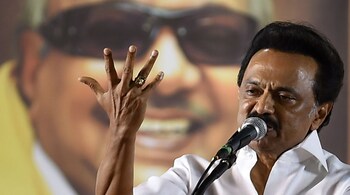
Politicians, especially from the Opposition got in on the act. Criticising the All India Anna Dravida Munnetra Kazhagam (AIADMK) government for its kowtowing the Bharatiya Janata Party (BJP) on the CAA-NRC issue, Dravida Munnetra Kazhagam (DMK) chief MK Stalin accused the ruling party of trying to be “more loyal than the king.”
Following this, many DMK bigwigs, including Stalin, drew ‘No to CAA-NRC’ kolams outside their houses and flooded social media with these pictures. Other opposition parties in the state also joined the protest. The ruling AIADMK was at the very least put to embarrassment but refused to buckle on the issue with Chief Minister Edappadi K Palaniswami saying that work on the National Population Register (NPR) in Tamil Nadu would begin in April.
There is significant unease with the CAA-NRC in Tamil Nadu and the AIADMK in its eagerness to please — or at least not annoy — the BJP seems to have scored a self-goal. It was the AIADMK’s 11 votes in the Rajya Sabha that was crucial in helping the BJP get the Citizenship Amendment Bill passed, and with this the Opposition has been presented with an emotive issue on a platter. After the demise of AIADMK leader and former Chief Minister J Jayalalithaa, the DMK has largely managed to consolidate a large portion of the minority votes in the state. The AIADMK’s support to the CAA-NRC has helped the DMK further strengthen its hold on that vote-bank.
Over the last one year Palaniswami has built a fair amount of goodwill for himself, as after uniting his party, he got down to governance in right earnest. His handling of the water crisis in Tamil Nadu and the efforts made in the second half of 2019 to woo investment to Tamil Nadu as well as the by-election victories in October have all established him as a leader of substance. Though the AIADMK finished marginally behind the DMK, the half-decent showing in the rural local body elections held in two phases in December has further consolidated his position in the party.
The reaction of the BJP to the kolam protest was largely muted, with some leaders laughing it off saying that getting the avowedly atheistic DMK leaders to draw the kolam (a Hindu symbol) in front of their houses during the holy month of Margazhi was a victory for the saffron party. Subsequently, party leaders put up ‘Support CAA’ kolams outside their houses.
Clearly the BJP now believes that the more the DMK pitches support for minority issues, the better will be the AIADMK-BJP combine's chances of triggering a Hindu consolidation as a backlash. Whether this will happen remains to be seen, but Tamil Nadu is definitely a more polarised state than it was six years ago. That will give the Narendra Modi-Amit Shah combine some hope in a state that has consistently rebuffed their attempts to make the lotus bloom there.
Sumanth Raman is a Chennai-based television anchor and political analyst. Views are personal.
Discover the latest Business News, Sensex, and Nifty updates. Obtain Personal Finance insights, tax queries, and expert opinions on Moneycontrol or download the Moneycontrol App to stay updated!





