India is in the spotlight as it prepares to host the G20 Summit, where over 40 global leaders will convene in New Delhi on September 9 and 10.
Recognised as one of India's most significant diplomatic gatherings, this year's G20 summit will signal the end of India's year-long presidency. It will culminate in the approval of the G20 leaders' declaration, a collective statement from the participating nations affirming their dedication to the priorities established during ministerial and working group meetings throughout the year.
The G20 comprises 19 nations – Argentina, Australia, Brazil, Canada, China, France, Germany, India, Indonesia, Italy, Japan, the Republic of Korea, Mexico, Russia, Saudi Arabia, South Africa, Turkey, the United Kingdom, and the United States – along with the European Union. Spain is invited as a permanent guest.
The G20 comprises many countries that collectively account for 65% of the global population, 79% of world trade, a significant 84% of the world's economy, and 79% of worldwide carbon emissions. The main objective of this summit is to unite key industrialised and emerging economies to address matters related to global economic and financial stability. To achieve the same, the leaders of G20 member nations convene annually to deliberate and develop policies concerning shared concerns.
Why G20
The G20 was established in an attempt to solve critical global crises, specifically following the 1994 Mexican peso crisis and the 1999 Asian financial crisis. During a G7 meeting in 1999 of central bankers and finance ministers, Canada's Paul Martin, who was the then-finance minister, recognised that although the gathering was intended to represent the world's most influential economies, it lacked essential voices.
So, during that G7 meeting in 1999, the G20 forum was formed after initiation by Martin and his American counterpart, the then-Treasury Secretary Larry Summers.
After determining the participating countries, the representatives convened for the inaugural meeting of this group in Berlin, Germany. However, it wasn't until 2008 that heads of government began taking part in these gatherings.
The initial G20 Leadership Summit, also recognised as the "Summit on Financial Markets and the World Economy," was held in Washington DC in November 2008. It witnessed the participation of leaders from the 20 member nations, along with heads of the International Monetary Forum, the World Bank, and the United Nations, in addition to Spain and the Netherlands.
Rotational presidency
The G20 has no permanent leader, and instead, each year a country is chosen to take on the presidency of the forum. In 2023, India holds this position, while Indonesia held it in the previous year. The nation in charge of the presidency guides the G20's agenda and hosts the summit.
The agenda and work of the G20 are carried out through three distinct tracks – the Sherpa track, the finance track and the engagement groups.
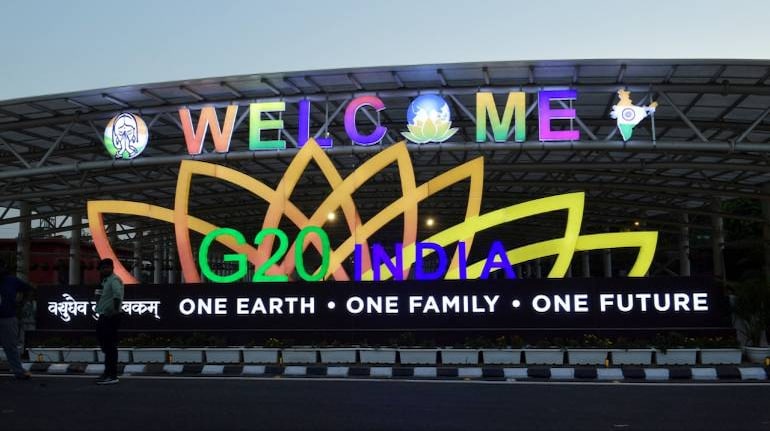
According to an official government statement, the 2023 G20 summit logo takes its inspiration from the lively hues of India's national flag, including saffron, white, green, and blue. It combines an image of planet Earth with the lotus, which is India's national flower, symbolising growth in the face of challenges. The Earth symbolises India's environmentally conscious way of life, characterised by a harmonious relationship with nature.
Typically, these summits conclude with a declaration or shared statement that all members agree upon. This document outlines their collective stances on issues like global conflicts, commitments related to climate change, areas of prospective cooperation, and more.
Discover the latest Business News, Sensex, and Nifty updates. Obtain Personal Finance insights, tax queries, and expert opinions on Moneycontrol or download the Moneycontrol App to stay updated!

Find the best of Al News in one place, specially curated for you every weekend.
Stay on top of the latest tech trends and biggest startup news.