

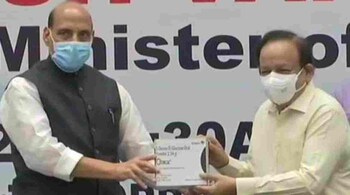
The 2-deoxy-D-glucose (2-DG) COVID-19 drug was touted as an “affordable” option, being indigenously co-developed by the Defence Research and Development Organisation’s (DRDO) Institute of Nuclear Medicine and Allied Sciences (INMAS) and Dr Reddy’s Laboratories.
The final pricing, however, has left much to be desired, with Dr Reddy’s announcing a steep Rs 990 per sachet price tag.
Follow our LIVE blog on the COVID-19 pandemic here
The final outcome seems far from what was promised in an official statement in May when a company spokesperson said the price is being determined “with a view to making it accessible and affordable to as many patients as possible".
In fact, speaking to media during the launch of the drug’s first batch on May 17, INMAS Director Dr Anil Mishra said the final price of 2-DG will be determined by manufacturer Dr. Reddy's, and that “it will be priced by keeping affordability in mind”.
The same refrain was repeated by Deepak Sapra, CEO, API & Services, Dr Reddy’s Laboratories at the price announcement on June 8: “The goal at Dr Reddy’s is to maximise production and make it accessible as much as possible to patients all over the country in as short a time frame as possible.”
Also Read: 2-DG | All you need to know about the new oral COVID-19 drug cleared by DCGI
It is however debatable, just how “accessible” or “affordable” medicine priced almost Rs 1,000 is.
The Drugs Controller General of India (DCGI) granted permission for the emergency use of the 2-DG drug, as an adjunct therapy in moderate to severe coronavirus patients. As per the Defence Ministry, it helped in faster recovery of hospitalised patients and reduced supplemental oxygen dependence during clinical trials.
Discover the latest Business News, Sensex, and Nifty updates. Obtain Personal Finance insights, tax queries, and expert opinions on Moneycontrol or download the Moneycontrol App to stay updated!





