

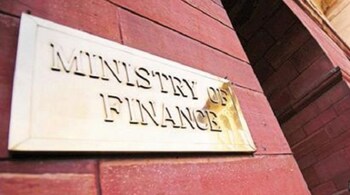
India’s growth and stability concerns are less than that of the world at large, the finance ministry said in its monthly economic review for September, estimating the country’s medium-term growth rate above 6 percent.
“A long-awaited domestic investment cycle that had started will accelerate once current external shocks – geopolitical conflicts and monetary tightening – fade,” the finance ministry said in the report, released on October 22. “Corporate and bank balance sheets in India are ready for it. India’s public digital infrastructure, after several years of development, appears poised to deliver big time on financial access and formalisation for households and smaller businesses in India."
Moreover, recent global developments have further bolstered the relative attractiveness of India as an investment destination, the ministry added.
India is poised to be one of the fastest-growing economies in the world this year, despite global growth concerns exacerbated by the Russia-Ukraine war, higher cost of living, worsening energy crisis, sharp monetary tightening and financial market volatility across the globe.
The world’s second-most populous country has so far been sheltered from the global economic turmoil, Prime Minister Narendra Modi said on October 22.
Still, global energy prices and supplies remain sources of concern, the finance ministry said. “Geopolitical conflicts may yet intensify reigniting supply chain pressures that have eased recently. If so, inflation may yet see a resurgence rather than a decline in 2023,” it added.
Meanwhile, learning losses caused by the pandemic-induced shutdowns and rising obesity levels restrain medium-term potential growth rate that has been bolstered by capital formation and boost to digitalisation.
Rebuilding the economy’s ability to grow and letting it grow, after at least half a decade of financial stress followed by the pandemic, the global inflation shock and the global tightening of financial conditions will yield results that would be hard for the world to miss, the ministry added.
The growth narrative in the first six months of the current financial year featured the thrust government provided to its capital expenditure that, until August, was 46.8 percent higher than the year-ago period.
Rising capex was supported by stronger revenue generation which has also kept the fiscal deficit until August aligned with its budgeted level. The deficit could have otherwise gone awry with high capital expenditure, higher fertiliser and food subsidies and excise tax cuts to rein in inflation, the finance ministry said.
Inflation outlook
While the increase in food prices appears to be key reason for pushing up retail inflation in September, the key price gauge is expected to trend lower in the rest of the fiscal year barring any weather extremities, the ministry said.
Yet, the inflation trajectory going forward hinges on geopolitical developments as elevated imported inflation is expected to be an upside risk with crude oil outlook remaining uncertain, with the risk further amplified by an appreciating US dollar, it added.
The Reserve Bank is due to present its report to the government after it failed to keep inflation within the target band of 2 percent to 6 percent for three quarters in a row. The monetary authority expects inflation to ease to the target of 4 percent over two years.
Current account deficit, rupee
Slowing exports and still high imports have widened India’s trade deficit and raised concerns over a ballooning of its current account gap with the rest of the world.
The finance ministry is confident about the country’s external position.
The widening of current account deficit should cease with the easing of global commodity prices. For India, the crude oil price may also decline as the country diversifies its crude purchases to include non-traditional suppliers, it said.
Merchandise exports, and thus the current account deficit, should also improve once export tariffs and other restrictions on exports put in place by the government to ease inflationary pressures are no longer required.
“Services exports may also improve as runaway inflation in advanced economies driving up wages makes local sourcing expensive, opening up avenues for outsourcing to low-wage countries, including India,” said the ministry.
The Reserve Bank of India has estimated the current account gap will be within 3 percent of gross domestic product for this financial year, which will be financeable, as capital flows are expected to be stable, according to the report.
The recent pressure on the rupee is “not entirely unexpected” as past evidence shows that whenever Federal Reserve tightens monetary policy, the dollar tends to appreciate against most of the currencies.
“However, unlike the taper tantrum in 2013 when the US Dollar has strengthened against the currencies of most of the EMEs, the macroeconomic fundamentals of the Indian economy are now stronger and forex reserves are ample,” the finance ministry said.
The series of measures taken by the RBI earlier this year should stabilize flows further and support the rupee, it added.
The rupee has been slipping to fresh lows against the dollar over the last few months but has performed better than several developed market and emerging market peers.
Discover the latest Business News, Sensex, and Nifty updates. Obtain Personal Finance insights, tax queries, and expert opinions on Moneycontrol or download the Moneycontrol App to stay updated!





