

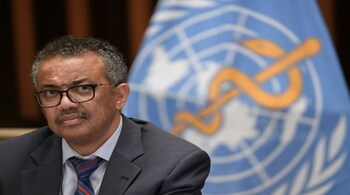
World Health Organisation (WHO) director general on May 23 warned the world leaders to start preparing for a disease even deadlier than COVID-19.
Speaking at the assembly weeks after ending the global emergency status for the COVID-19 pandemic, Tedros Adhanom Ghebreyesus said it was time to advance negotiations on preventing the next pandemic.
"We cannot kick this can down the road," the WHO director-general said in a major address to the agency's member states, warning that the next pandemic was bound to "come knocking".
“If we do not make the changes that must be made, then who will? And if we do not make them now, then when?," he added.
Meanwhile, another report by Daily Mail noted, that the WHO has identified nine priority diseases that pose the biggest risk to public health. These diseases are cited as risky due to a lack of treatment or their ability to cause a pandemic.
The 10-day annual World Health Assembly in Geneva, which coincides with the WHO's 75th anniversary, is set to address global health challenges including future pandemics, eradicating polio and supporting steps to ease Ukraine's health emergency triggered by Russia's invasion.
The WHO's 194 member states are now drafting a pandemic treaty which is up for adoption at next year's assembly.
"A commitment from this generation (to a pandemic accord) is important, because it is this generation that experienced how awful a small virus could be," said Tedros.
At the same meeting, countries approved a $6.83 billion budget for 2024-25 - a decision that tested national commitments to fixing a WHO funding model which was seen as too small and overly reliant on the vagaries of donors.
(With inputs from agencies)
Discover the latest Business News, Sensex, and Nifty updates. Obtain Personal Finance insights, tax queries, and expert opinions on Moneycontrol or download the Moneycontrol App to stay updated!





